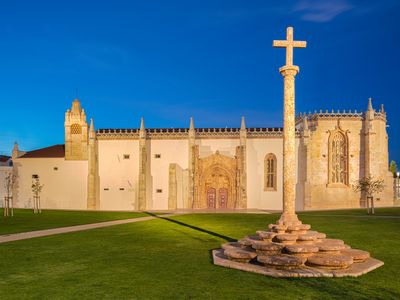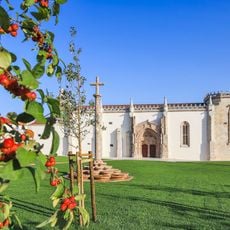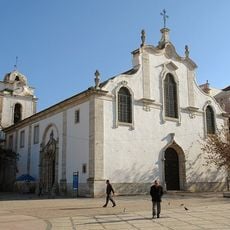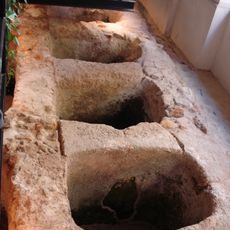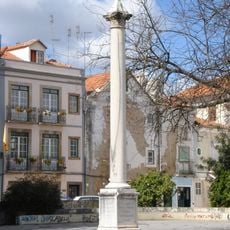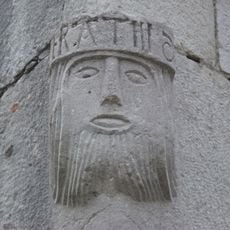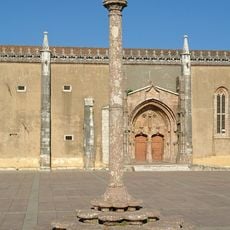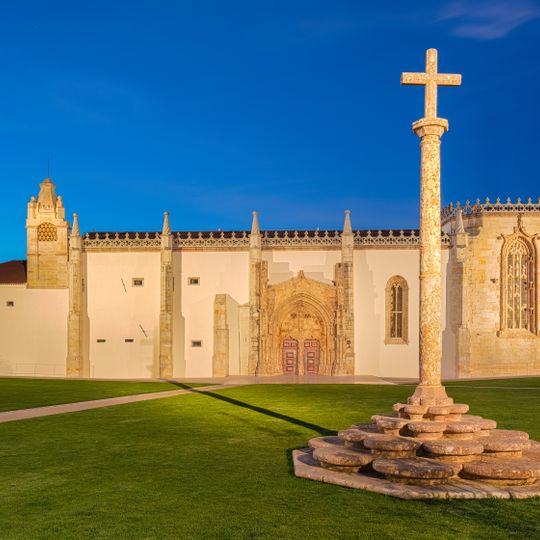
Church of the Monastery of Jesus of Setúbal, Early Gothic religious complex in Setúbal, Portugal.
This monastery church has a rectangular nave with a polygonal choir at its far end, supported by buttresses decorated with gargoyles and stone pinnacles across the exterior. The structure shows clear Gothic influences in its pointed arches and vertical emphasis, creating a compact sacred space for worship.
Construction started in 1490 when Justa Rodrigues Pereira initiated the project and King John II commissioned the architect Diogo de Boitaca to design it. This period marked a time when monastic communities were building larger, more elaborate complexes across Portugal.
The interior walls are lined with 17th-century ceramic tiles showing scenes from Mary's life, each framed with colorful borders that visitors notice immediately when walking through. These decorative tiles reflect the religious devotion of their time and shape how people experience the space today.
The monastery includes a museum with Flemish and Portuguese paintings from the 15th and 16th centuries, with several works linked to the School of Jorge Afonso. Plan enough time to explore both the art collection and the architectural details throughout the building.
The church features twisted subcolumns carved from pink Arrabida stone, supporting pointed arches along the narrow central nave in an eye-catching way. This local pink stone became a distinctive material choice for important religious buildings across the Setúbal region.
The community of curious travelers
AroundUs brings together thousands of curated places, local tips, and hidden gems, enriched daily by 92,847 contributors worldwide.