Shikhans of Arakul, Granite mountain formation in Kaslinsky District, Russia
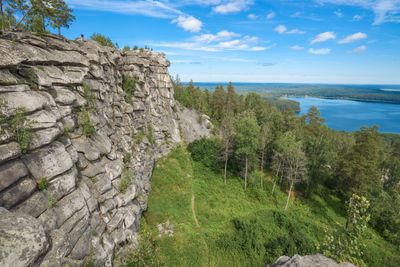
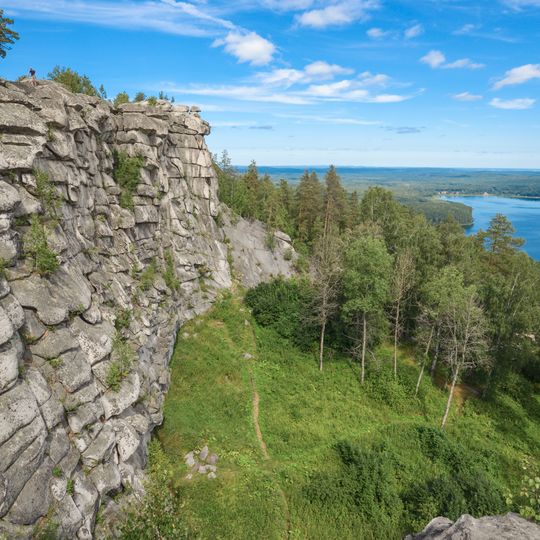
The Shikhans of Arakul are steep granite peaks rising prominently above the landscape in the Middle Urals region. The formation consists of several distinct rocky towers of varying heights, with multiple hiking and climbing routes available throughout the area.
Archaeological work led by E. V. Tiedemann in the 2000s found nine ancient camps on the Shikhans, dated from the early Iron Age to the late Middle Ages, with many ritual objects and no everyday dwellings. A 1-metre menhir with a carved belt and notches stands east of the ridge, and in 2000 V. N. Shirokov and G. V. Sharoikin found the Arakul pisanitsa, a rock drawing 125 m south of it. In 2006 speleologist V. I. Yurin described 11 small cave features and 6 megalith-like objects.
The name "shikhan" is Turkic for a mountain with rocks on its summit; the massif is also called Dikiy Kamen (Wild Stone). Archaeologists found nine ancient camps here with many ritual objects, and concluded the rocks served as a cult site and watchpost. A 1 m menhir with a carved belt and notches stands east of the ridge.
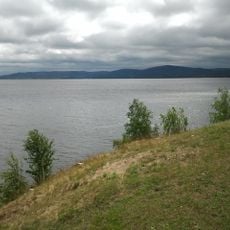
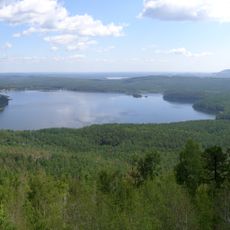
Access to the peaks typically begins from near Lake Arakul, where the main trailheads are located for visitors. Routes vary in difficulty and physical demand, so hikers should assess their fitness level before planning which paths to take.
On the rocks are bowl-shaped hollows from tens of centimetres to several metres wide, some holding rainwater. Archaeologists found charcoal and ash in them and link their origin to fires lit repeatedly in the same spots by ancient people. Nearby stood a 1 m menhir with a carved belt and notches, and in 2000 a rock painting was found 125 m south of it.
The community of curious travelers
AroundUs brings together thousands of curated places, local tips, and hidden gems, enriched daily by 94,048 contributors worldwide.