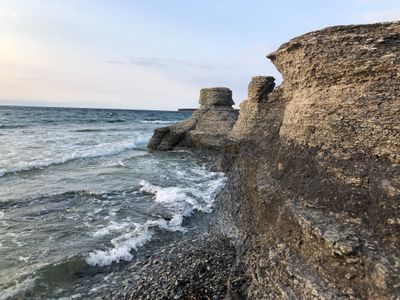
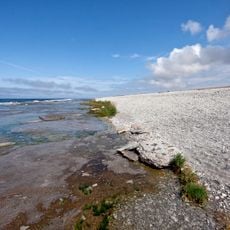
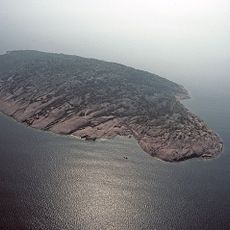
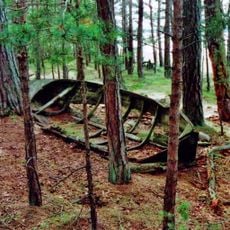
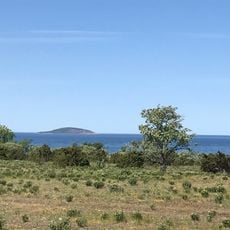
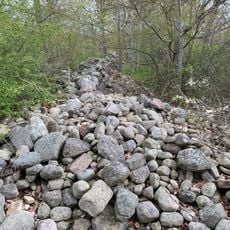
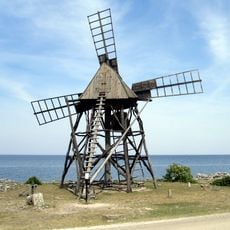
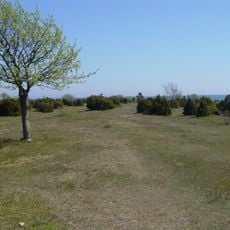
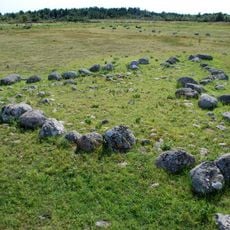
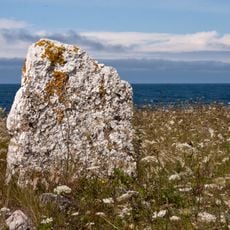
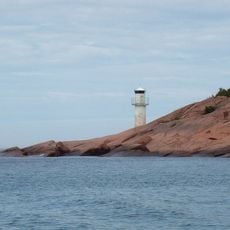
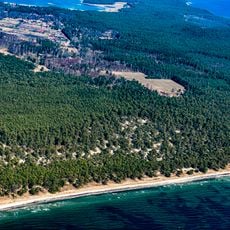
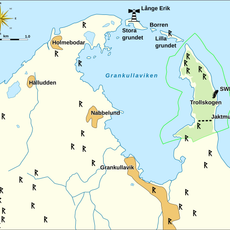
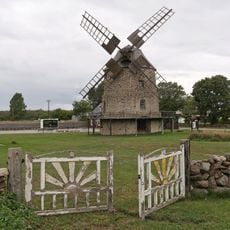
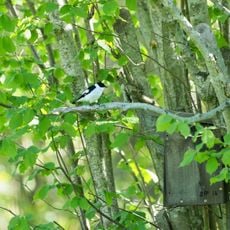
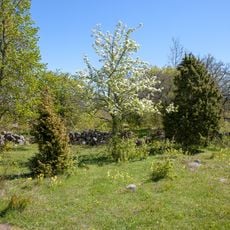
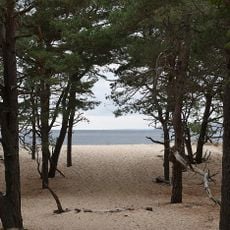
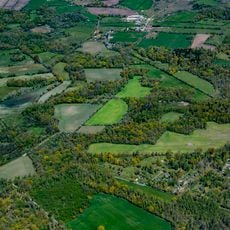
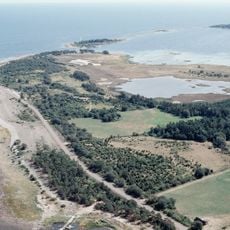
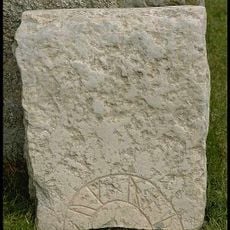
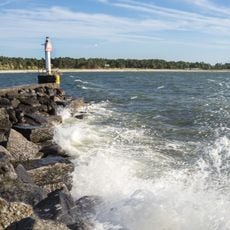
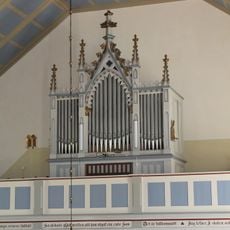
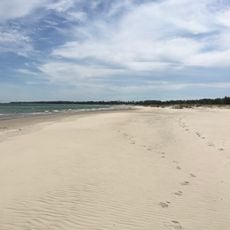
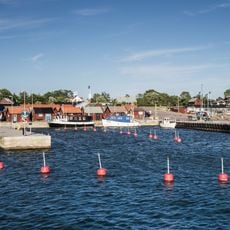
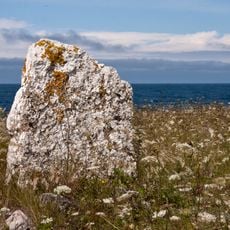
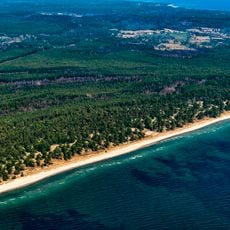
Byrum's raukar, Nature reserve on western shore of Öland, Sweden.
Byrums raukar is a nature reserve on the west coast of Öland, near the village of Byrum, with about 120 limestone columns along a 600-metre beach. The largest columns reach roughly four metres high. They were formed by wave erosion of softer limestone, and fossils such as orthoceratites and trilobites have been found, especially in the southern part of the reserve.
Around 490 million years ago, this part of what is now Sweden lay beneath a shallow tropical sea where coral reefs grew during the Ordovician period. When the sea withdrew, the reef material was left behind and slowly carved by erosion into the columns visible on the shore today.
The name rauk is the local term for these limestone columns; the area is also called Byerums raukar after the nearby village. The reserve is a protected site where the fodder plant Eryngium maritimum, which is protected by law, grows among sparse vegetation, and insects such as antlions live in the sandy pine woods behind the beach.
The reserve sits close to the village of Byrum and is easy to reach by car, with parking areas near the site. Arriving earlier in the day gives visitors more time to walk along the shore and see the columns without crowds.
This type of limestone column is found only on the Swedish Baltic islands, and the Byrum shoreline is one of the densest concentrations on Öland. What many visitors do not realize is that some columns normally sit below the waterline and only become visible when the water level drops, hinting that the formation extends further into the sea.
The community of curious travelers
AroundUs brings together thousands of curated places, local tips, and hidden gems, enriched daily by 94,340 contributors worldwide.