Neptune's fields, Nature reserve in Borgholm Municipality, Sweden
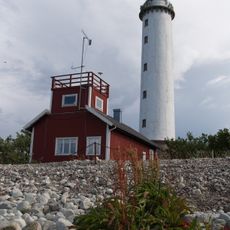
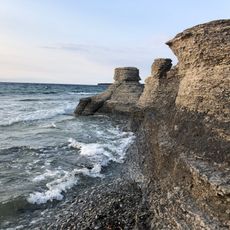
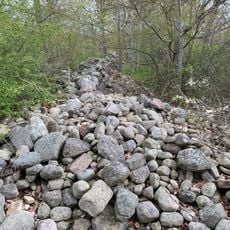
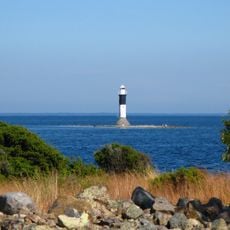
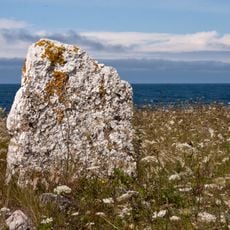
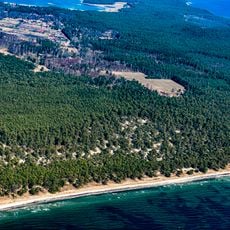
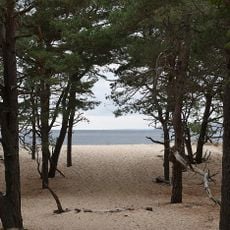
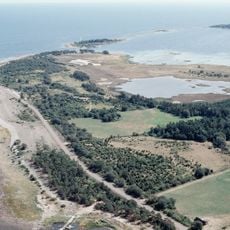
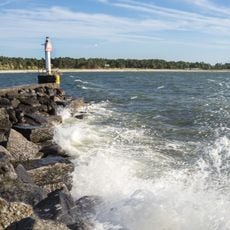
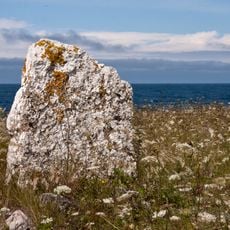
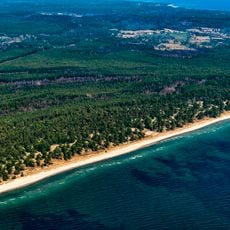
Neptune's fields is a protected area along the Kalmar Strait featuring a long cobble beach with notable limestone outcrops and weathered pebbles. The rocky landscape displays evidence of thousands of years of wave action and coastal erosion.
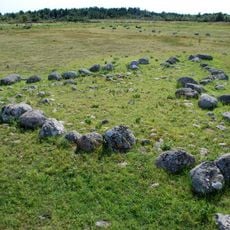
Carl Linnaeus named the site in 1741 during his journey to Öland. The grave field just south of the beach was dated to the Viking Age by finds from T. J. Arne's 1935 excavation. Its probably youngest grave, a stone cist, was oriented east-west in Christian fashion.
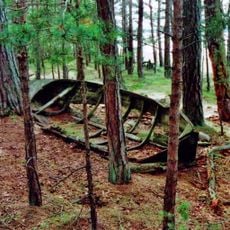
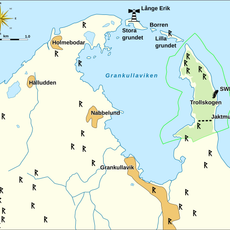
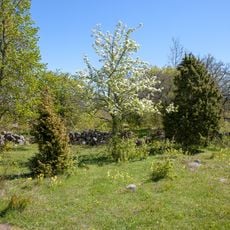
Just south of the cobble beach lies a grave field measuring 150 by 30 metres, with over 50 ancient remains: 32 round stone settings, twelve cairns, nine cists, a three-pointed stone and a ship-shaped setting called Forgallaskeppet, 14 metres long. Excavations by T.J. Arne in 1935 dated it to the Viking Age; the youngest cist is oriented east-west, in Christian fashion.
Marked trails allow exploration throughout the summer months, especially when blue flowering plants appear across the rocky ground. The area is accessible but features uneven terrain that requires sturdy footwear.
The pebble beach preserves fossils from prehistoric seas, including remains of trilobites and brachiopods. These traces allow visitors to touch tangible evidence of ancient ocean life spanning millions of years.
The community of curious travelers
AroundUs brings together thousands of curated places, local tips, and hidden gems, enriched daily by 94,512 contributors worldwide.