Penghu Mazu Temple, Mazu temple in Zhongyang Village, Taiwan
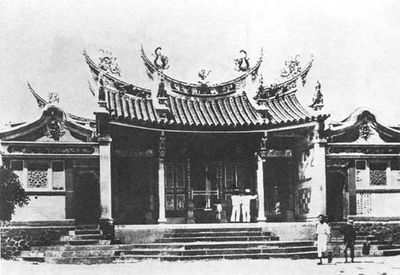
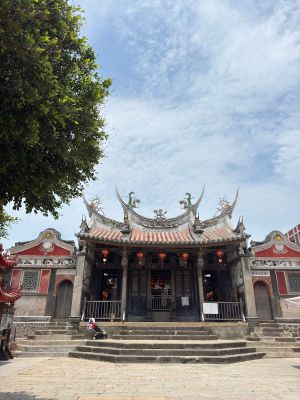
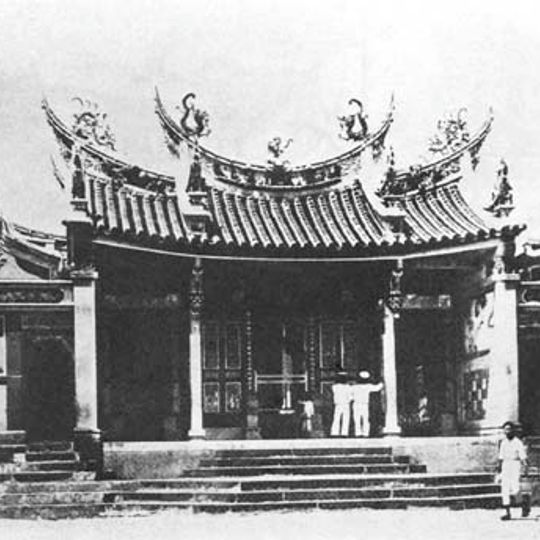
The Penghu Mazu Temple is a country-level monument in Zhongyang Village, Taiwan, built from three connected sections: a front hall, a middle hall, and a rear hall. Side structures known as guarding dragons link the sections together.
A 1604 stele recording Shen Yourong's demand that the Dutch commander Wybrand van Warwijck leave Penghu was unearthed during the 1919 renovation, confirming the temple existed before that year. Dutch maps of the 1620s already mark a Chinese temple at this spot; Balthasar Bort's forces burned it in 1664. Shi Lang's 1683 victory led the Qing to grant Mazu the title Tianhou in 1684, renaming the temple.
Carvings throughout the temple follow the Chaozhou tradition, with gold powder paintings framing the main altar in techniques rarely practiced today. Visitors can see examples of traditional woodwork created by artisans from coastal China.
The temple stands on Zhengyi Street in Magong and is open daily from 7:00 am to 5:30 pm. It is built on a slope, so visitors climb a set of polygonal stone steps from the forecourt up into the front hall, and the floors keep rising toward the rear hall.
Two Mazu figures are often confused. The main idol in the main hall is said to be over 700 years old, carved from a single block of wood weighing about 150 kilograms. A separate soft-bodied Mazu image of roughly 400 years, from the Tianjin Tianhou Temple, sits in the east room of Qingfeng Pavilion.
The community of curious travelers
AroundUs brings together thousands of curated places, local tips, and hidden gems, enriched daily by 95,118 contributors worldwide.