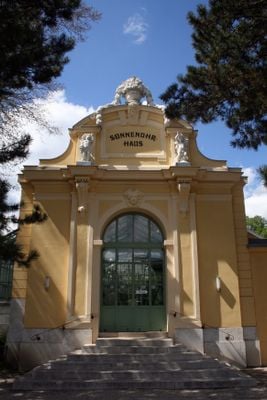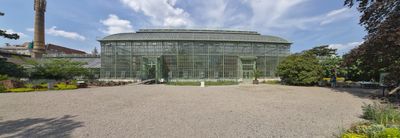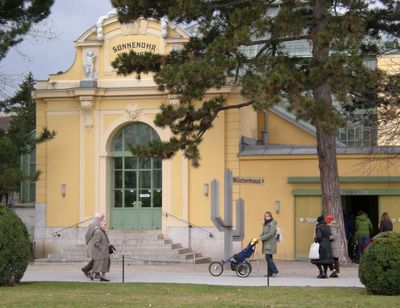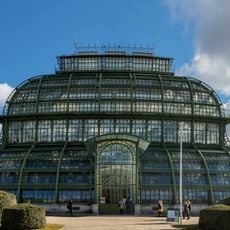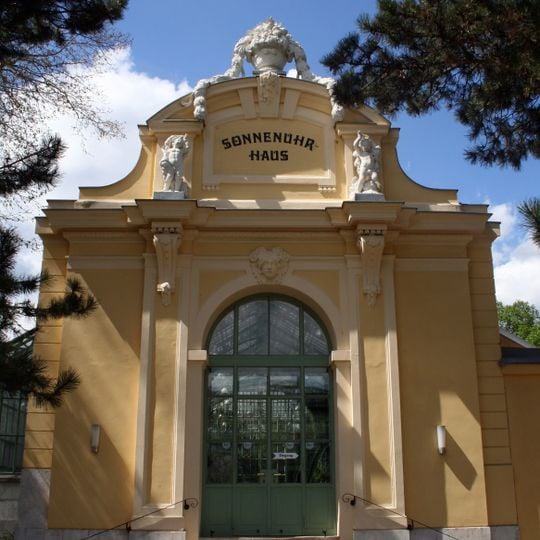
Wüstenhaus Schönbrunn, Desert exhibition pavilion in Schönbrunn Palace Park, Austria.
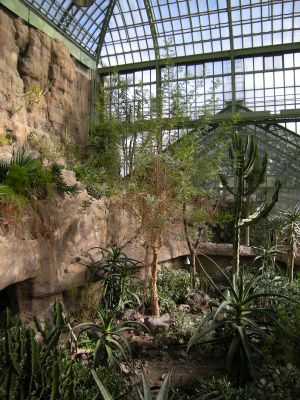
The Wüstenhaus Schönbrunn is an elongated glass structure within the palace park grounds that houses plants from arid climates. It contains collections from Madagascar, Old World deserts, and New World drylands, with each region displaying its own distinctive species.
Emperor Franz Joseph I commissioned this glass structure in 1904 to protect rare plants from Australia and other arid regions. Architect Alfons Custodis designed the building to preserve the royal botanical collections.
The building reflects Vienna's fascination with distant lands and exotic plants during the early 1900s. Visitors can observe how botanical interest and exploration of the world were closely connected at that time.
The house is open during daytime hours and sits conveniently within the Schönbrunn park, where the zoo is also located. The site benefits from good public transportation connections from central Vienna.
Inside grow two Welwitschia plants that can live for thousands of years, placing them among the longest-living plants on Earth. These specimens are particularly noteworthy because they demonstrate how ancient and resilient life forms can thrive in this controlled environment.
The community of curious travelers
AroundUs brings together thousands of curated places, local tips, and hidden gems, enriched daily by 92,872 contributors worldwide.