Bulls of Guisando, Celtiberian stone sculptures in El Tiemblo, Spain
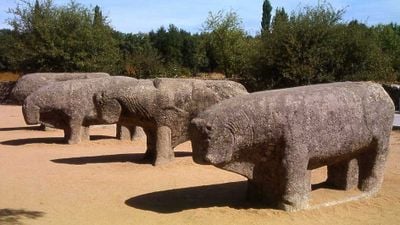
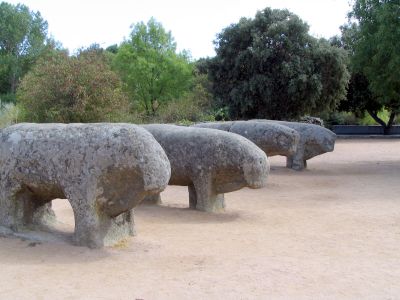
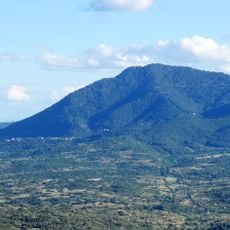
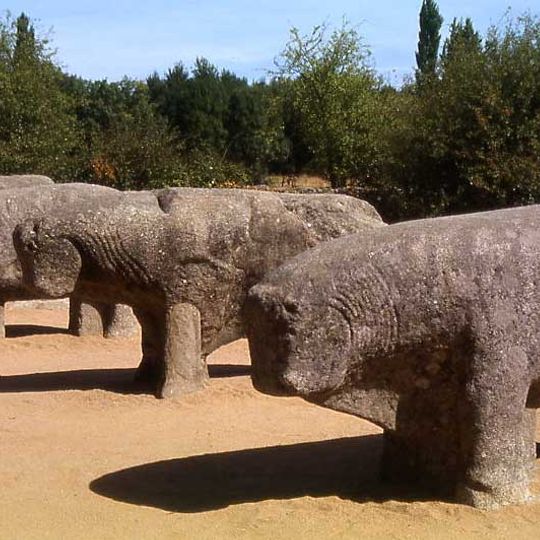
The Bulls of Guisando are four granite animals on a hill near El Tiemblo, standing about 2 meters (6.5 feet) tall and showing details like horns, snouts, and legs. The figures sit side by side on open ground overlooking the surrounding fields and mountains.
The stone animals date from the second century before Christ and were created by the Vettones people who inhabited this region before the Roman conquest. The field around the sculptures was later chosen in 1468 as the location for signing the treaty between Henry IV and Isabella of Castile.
The sculptures carry engraved Latin inscriptions that document their later reuse during Roman rule. One of the dedications mentions Longinus and his father Prisco, showing how the Romans integrated the ancient stones into their own memorial rituals.
The sculptures stand on open ground and are reached by a short path from the parking area. Information panels on site explain the significance of these pre-Roman finds in several languages.
The stones were originally used as burial markers or protective figures for livestock herds before receiving new inscriptions in Roman times. Their exact original meaning remains a subject of scholarly debate among archaeologists.
The community of curious travelers
AroundUs brings together thousands of curated places, local tips, and hidden gems, enriched daily by 91,529 contributors worldwide.