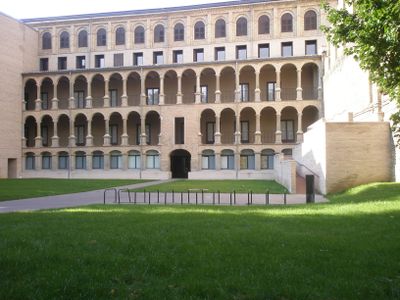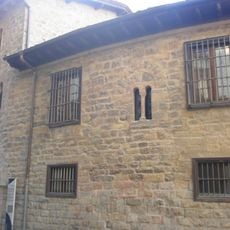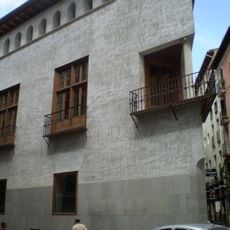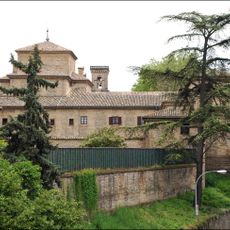
Palacio de Ezpeleta, 18th-century palace in Old Town, Pamplona, Spain.
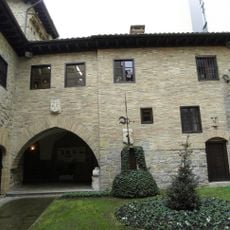
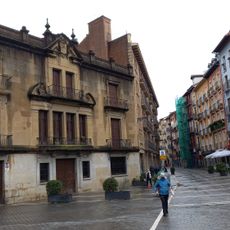
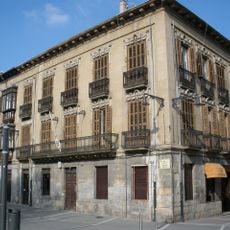
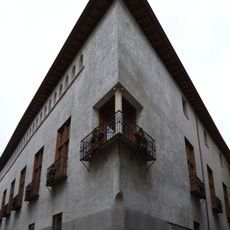
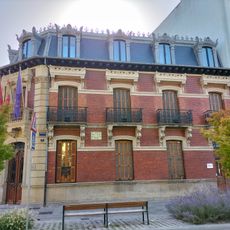
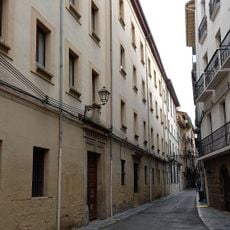
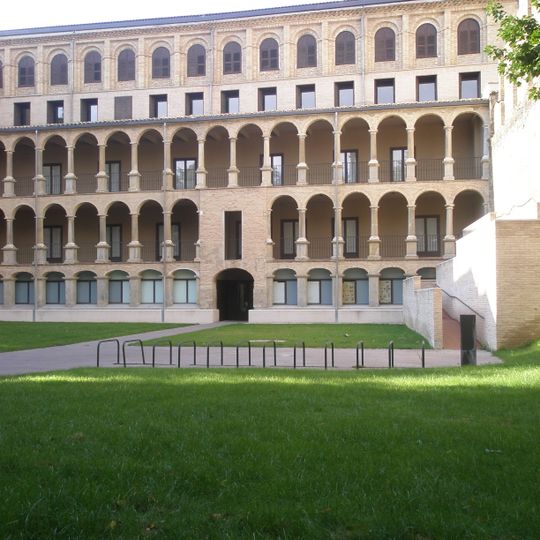
The Palacio de Ezpeleta is an 18th-century palace located in the Old Town with stone walls finished in rustic ashlar and refined brick details. Its principal floors feature noble balconies, while the upper story showcases circular windows that punctuate the roofline.
Construction began in 1698 under Agustín de Echeverz y Subiza, the first Marquis of San Miguel de Aguayo, following his return from the New Kingdom of León. The building subsequently underwent modifications, including the addition of heraldic elements when acquired by later owners in the early 1800s.
The coat of arms displayed above the entrance marks the palace's connection to the Ezpeleta family and their role in the city's elite circles. This heraldic symbol remains a visible link to the aristocratic past that shaped the building's identity.
The building is currently occupied by educational institutions that limit public access to its interior. Visitors can best appreciate its architectural features from the street, where the stonework, balconies, and upper-story windows are clearly visible.
The entrance portal designed by Domingo Gaztelu in 1709 features an unusual decoration of cannonballs embedded in the stone, referencing the military past of its original owner. This distinctive detail caught the attention of Victor Hugo during his travels and remains a curious element for those studying the facade closely.
The community of curious travelers
AroundUs brings together thousands of curated places, local tips, and hidden gems, enriched daily by 60,000 contributors worldwide.