Palacio Condestable de Pamplona, Renaissance palace in historic district of Pamplona, Spain.
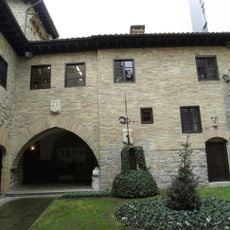
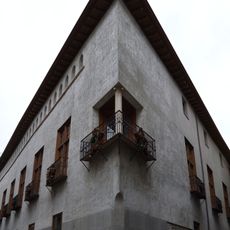
The Palacio del Condestable stands at the corner of Mayor and Jarauta streets in Pamplona's old town. It is the only surviving example of 16th-century civil architecture in the city. A vestibule on the main facade leads to a rectangular courtyard framed by fourteen octagonal stone columns, eight of them original. A garden occupies the rear, where stables once stood.
In 1548 Luis de Beaumont, Constable of Navarre, bought four adjoining houses to enlarge his residence at the corner of Calle Mayor. The palace later passed to the Alba family, then to Bishop Bernardo Rojas in 1590, and served as the bishopric's official residence for 150 years. It housed the city council while the baroque town hall was built between 1752 and 1760. Declared a Bien de Interés Cultural in 1997, it opened as the Civivox Condestable civic centre on 22 April 2009.
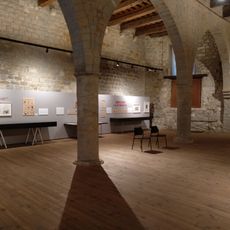
The palace houses the Pablo Sarasate Museum, displaying the renowned violinist's instruments including Vuillaume violins and a Bechstein piano collection. Visitors can see personal items and gifts that reflect the musician's life and achievements.
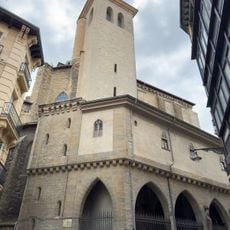
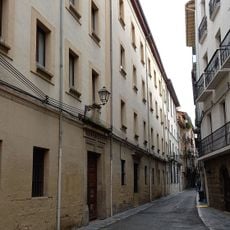
The palace stands at the corner of Calle Mayor and Calle Jarauta, in the pedestrian streets of the old town, opposite the 13th-century church of San Saturnino and on the Camino de Santiago route. The ground floor holds the city's General Registry office; the civic centre and Sarasate Museum are reached from the same entrance.
The palace stands on the site of a late antique necropolis from the 5th–6th centuries, found during archaeological work and now destroyed. In the courtyard, 14 octagonal stone columns frame the space, 8 of them original; a basin discovered in the excavations is also visible there.
The community of curious travelers
AroundUs brings together thousands of curated places, local tips, and hidden gems, enriched daily by 94,090 contributors worldwide.