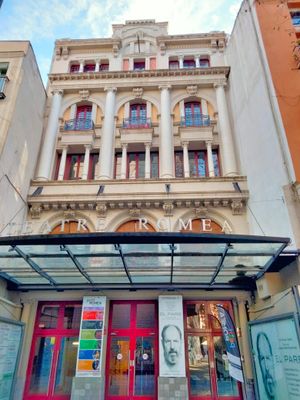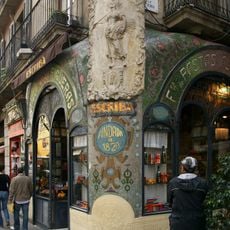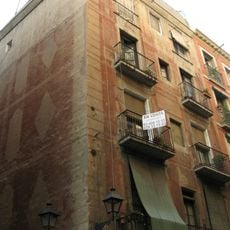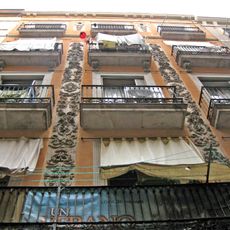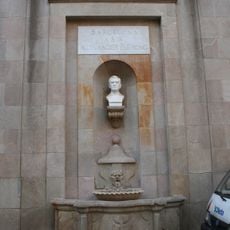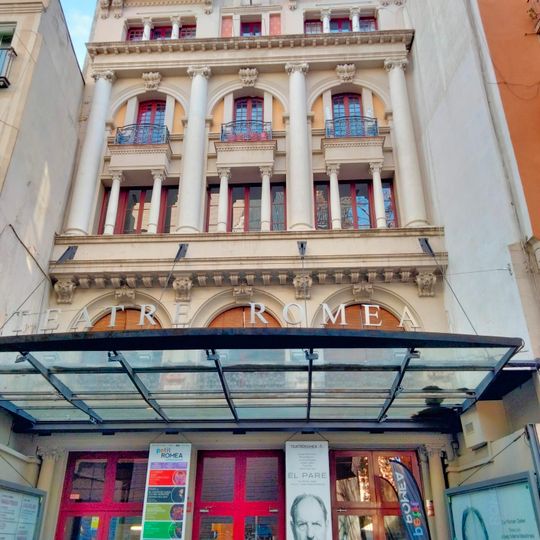
Teatre Romea, 19th-century theatre in El Raval district, Barcelona, Spain.
Teatre Romea is a theatre in the El Raval district of Barcelona, built in the 19th century and still in regular use today. The auditorium follows a traditional Italian layout with tiered seating, a proscenium arch decorated with floral motifs, and an ornate painted ceiling.
The building opened in 1867 on the site of a former artisan club and was first used as a dance hall serving the working-class population of the area. Over the following decades it gradually shifted toward theatre and became one of the main stages in the city.
The Teatre Romea has long been a stage for Catalan-language theatre, and many of the productions here are performed in Catalan rather than Spanish. This makes it a place where the local language and storytelling tradition feel genuinely present.
The theatre sits in El Raval, a central neighbourhood that is easy to reach on foot from many parts of the old city. As the building dates from the 19th century, visitors with mobility needs should check access conditions before their visit.
In 1897 this theatre was among the first places in Barcelona to screen moving images, using a device called the Heliocinografo invented by an engineer named Bousset. This happened just two years after the Lumiere brothers held their first public screening in Paris.
The community of curious travelers
AroundUs brings together thousands of curated places, local tips, and hidden gems, enriched daily by 91,547 contributors worldwide.