Botin Centre, Arts centre near Pereda Gardens, Santander, Spain
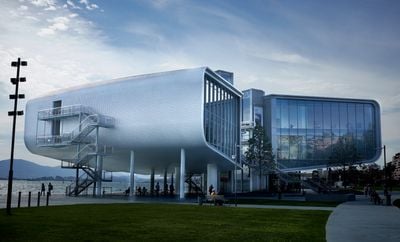
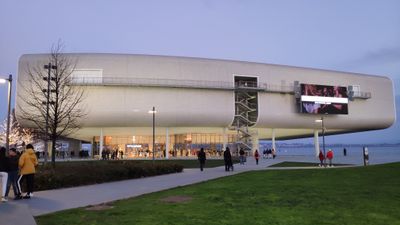
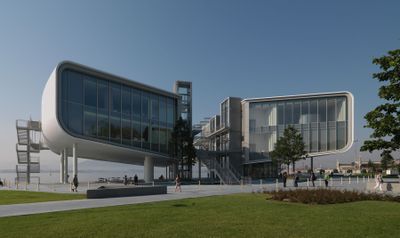
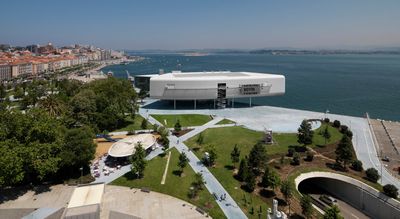
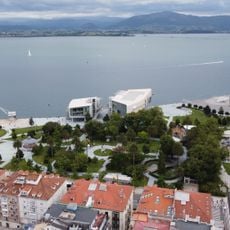
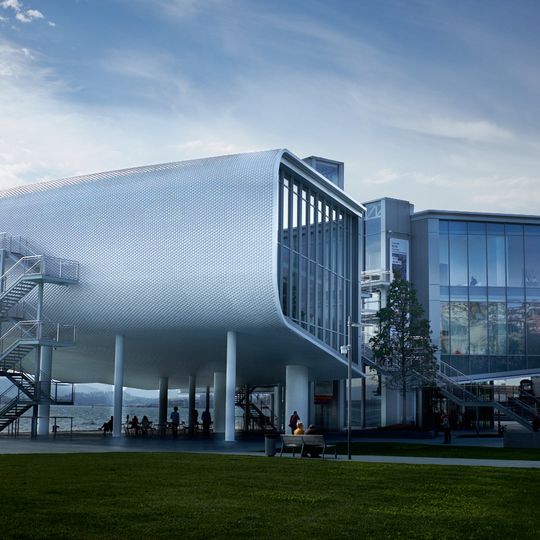
Centro Botín is an arts center near the Pereda Gardens in Santander, Spain, featuring two elevated gallery volumes supported by slender columns. The facade is clad with 280,000 ceramic tiles that reflect light from Santander Bay and shift in color throughout the day.
Construction began in 2012 after the Botín Foundation commissioned Pritzker Prize laureate Renzo Piano for his first project in Spain. The building opened in 2017, bringing an international cultural hub directly to the Santander waterfront.
The name honors the Botín family, whose foundation has supported art in northern Spain for decades. Locals gather here for talks and events that connect contemporary themes with Santander's maritime identity.
An underground passage connects the Pereda Gardens to the entrance, allowing visitors to walk directly from the park to the harbor promenade. The exhibition spaces are open daily from 10 AM to 8 PM, with rotating displays across multiple floors.
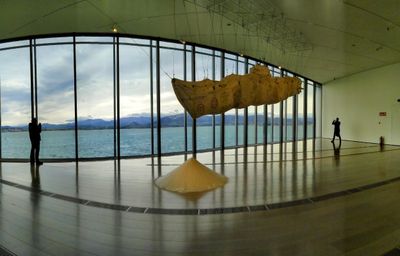
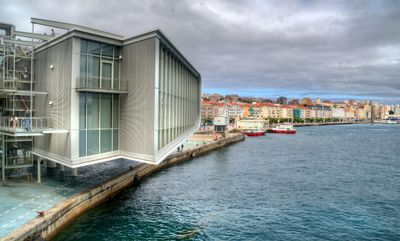
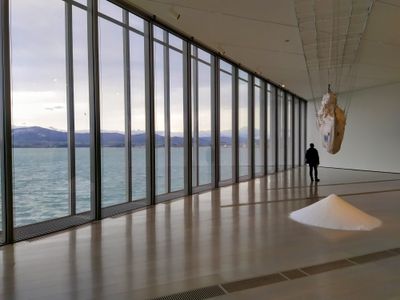
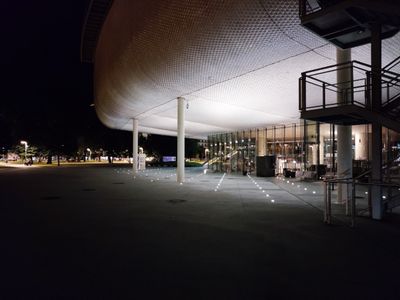
The structure extends over the water on pillars, creating an elevated walkway that offers unobstructed views across the bay and the Cantabrian Sea. Below, a public space emerges at low tide, accessible on foot and reinforcing the connection to the sea.
Location: Santander
Inception: June 23, 2017
Founders: Emilio Botín
Architects: Renzo Piano, Luis Vidal
Official opening: June 23, 2017
Accessibility: Wheelchair accessible
Fee: Yes
Operator: Fundación Botín
Address: Muelle de Albareda s/n, Jardines de Pereda, 39004 Santander, España
Opening Hours: June-September Tuesday-Sunday 10:00-21:00; October-May Tuesday-Sunday 10:00-14:00,16:00-20:00; Monday off; December 25, January 1 off
Phone: +34942047147
Email: info@centrobotin.org
Website: https://centrobotin.org
GPS coordinates: 43.46055,-3.80388
Latest update: December 4, 2025 11:50
Renzo Piano, born in Genoa in 1937, has developed an architectural language over five decades that combines technical precision with human scale. His buildings are characterized by transparent facades, visible structural elements, and the integration of natural light. The Centre Pompidou in Paris, completed in 1977 with Richard Rogers, displays building services on the exterior. The Whitney Museum in New York uses industrial materials within a residential neighborhood. The Shard in London reaches 309 meters with a glass facade that reflects daylight. His cultural buildings connect function with urban context. The Fondation Beyeler in Riehen near Basel sits within a park with glass walls between interior and exterior spaces. The Auditorium Parco della Musica in Rome comprises three concert halls with different acoustics. Kansai Airport in Osaka stands on an artificial island with a 1.7-kilometer terminal. Piano received the Pritzker Prize in 1998 for his work.
Cantabria is a region where water, stone, and forest meet. You can walk along the coast where cliffs drop sharply into the sea, then turn inland to find valleys full of green grass and small villages built from local stone. Port towns sit beside the water, their harbors filled with fishing boats. Wide sandy beaches stretch between rocky headlands, offering places to swim and walk. The region holds some of the oldest art in Europe. Inside caves like Altamira, animals painted thousands of years ago still cover the stone walls - red and black figures of bison, horses, and hands that feel immediate and alive when you stand before them. Medieval villages like Santillana del Mar look like they stopped in time, with cobbled streets, stone houses, and quiet plazas where locals gather. Beyond the towns and villages rises the Picos de Europa, a mountain range where jagged peaks touch the clouds. Here you can hike through forests, cross rushing rivers, and camp under stars far from city lights. Santander itself sits on the coast as the region's main city, where urban parks meet the beach and modern life flows alongside the ocean. From any point in Cantabria, you are never far from either the sea or the mountains.
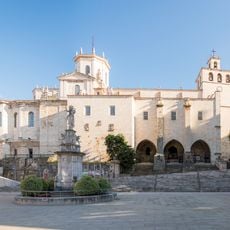
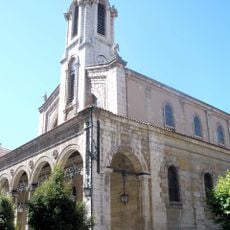
Santander Cathedral
293 m
Banco de Santander, Santander
171 m
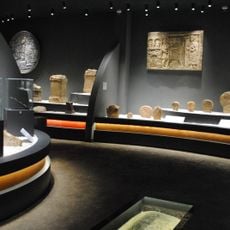
Museo de Prehistoria y Arqueología de Cantabria
191 m
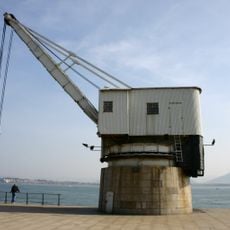
Santander Crane Monument
73 m
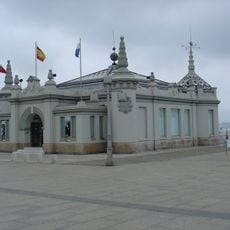
Palacete del Embarcadero
183 m
Banco Mercantil, Santander
259 m
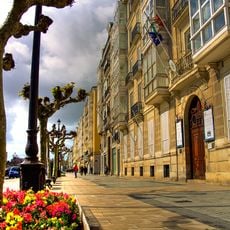
Conjunto Histórico Paseo de Pereda y Calle Castelar
65 m
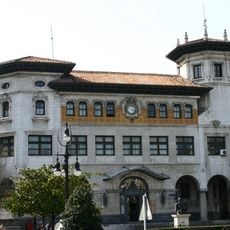
Delegación de Correos, Santander
247 m
Conjunto Histórico Paseo de Pereda y Calle Castelar
137 m
Refugio antiaéreo Mariana Pineda
243 m
Castillo de San Felipe
227 m
Estatua de Pedro Velarde
230 m
Monumento a la Asunción de la Virgen
290 m
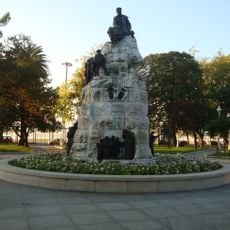
Monumento a Jose María Pereda
87 m
Bust of Alfonso XIII
224 m
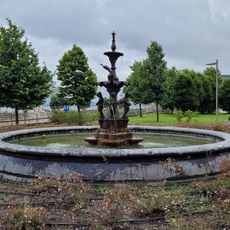
Fuente de Los Meones
159 m
Monumento a Concha Espina
121 m
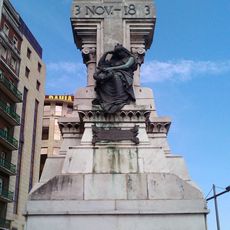
Monumento a las víctimas del Machichaco
277 m
Monumento a Victor de la Serna
114 m
Monumento a la Armada Española
95 m
Heladerías Regma
125 m
Alfonso XIII
223 m
Scenic viewpoint
17 m
Monumento "El Montañés"
293 m
Monumento al Fuero de Santander
178 m
Monumento al incendio de Santander
149 m
Catholic church building, wayside cross
324 m
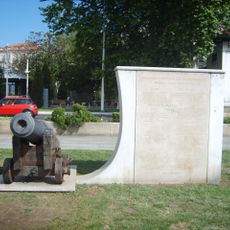
Cannon
110 mVisited this place? Tap the stars to rate it and share your experience / photos with the community! Try now! You can cancel it anytime.
Discover hidden gems everywhere you go!
From secret cafés to breathtaking viewpoints, skip the crowded tourist spots and find places that match your style. Our app makes it easy with voice search, smart filtering, route optimization, and insider tips from travelers worldwide. Download now for the complete mobile experience.
A unique approach to discovering new places❞
— Le Figaro
All the places worth exploring❞
— France Info
A tailor-made excursion in just a few clicks❞
— 20 Minutes