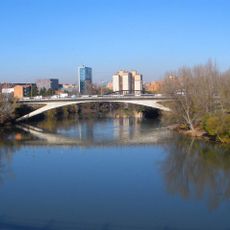
Puente de Hispanoamérica, Valladolid, Cable-stayed bridge in Valladolid, Spain.
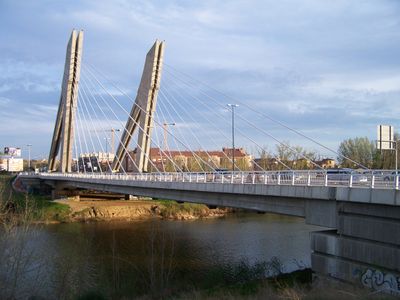
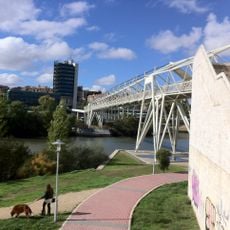
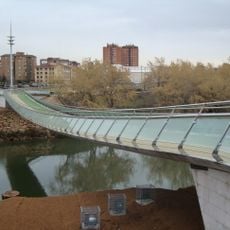
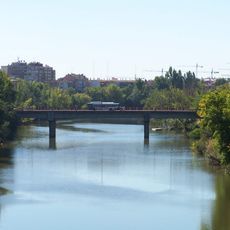
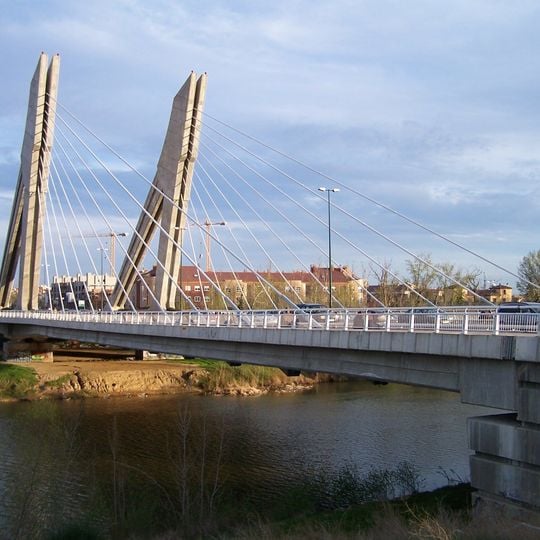
The Puente de Hispanoamérica crosses the Pisuerga River using two triangular pylons that support the roadway through cable stays. The structure spans about 156 meters and connects the neighborhoods of Covaresa and Parquesol with four traffic lanes, pedestrian paths, and bicycle routes.
The bridge was built between 1996 and 1999 by engineers Juan José Arenas and Marcos Pantaleón as part of the Zamora Avenue expansion. This project emerged to improve connections as the city's outlying neighborhoods continued to grow.
The bridge name reflects the connections between Spain and Latin American countries, serving as a symbol of shared heritage.
The bridge is easy to cross on foot or by bicycle and provides good views of the river from its elevated position. Access is unrestricted around the clock, and the structure sits near residential areas and public green spaces.
The bridge features an uncommon design where massive concrete pillars replace rear stays and form triangular frameworks with the main pylons. This sturdy construction approach makes it noteworthy from both technical and architectural perspectives.
The community of curious travelers
AroundUs brings together thousands of curated places, local tips, and hidden gems, enriched daily by 92,375 contributors worldwide.