Palacio de Nájera, Baroque palace and city museum in Antequera, Spain
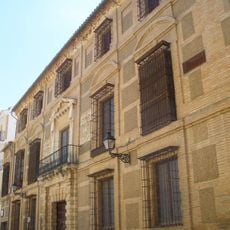
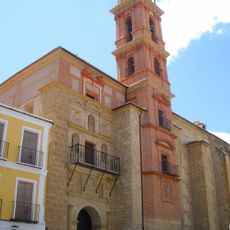
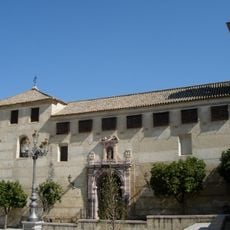
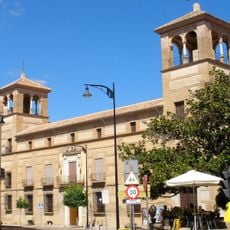
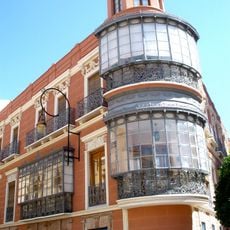
The Palacio de Nájera is an 18th-century Baroque urban palace in Antequera, its main brick facade facing the Plaza del Coso Viejo. The lower two floors date from the early 1700s, while the upper attic and the corner tower-mirador were added by the master builder Nicolás Mejías. Inside, a cloistered courtyard has Tuscan columns of red limestone from El Torcal and brick arches, and the staircase is covered by a dome with Baroque stucco work attributed to Antonio Ribera.
The palace dates from the first decades of the 18th century, built on an earlier facade as the family mansion of Alfonso de Eslava y Trujillo. His son Francisco de Eslava y Almazón completed the works and added the tower-mirador. Since 1972, after a thorough rehabilitation, it has housed the Museo de la Ciudad de Antequera.
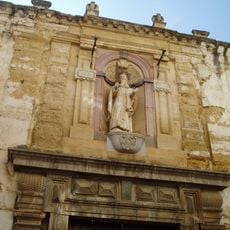
The building's name comes from the Nájera street where it stands, and since 1972 it has housed the Museo de la Ciudad de Antequera. Its rooms display finds from all periods of the city's past, among them the Efebo de Antequera, a 1st-century sculpture, and a sculpture of Saint Francis of Assisi.
The museum occupies the palace since 1972, after a thorough rehabilitation. All accesses open onto the Plaza del Coso Viejo, at the corner of Calle Nájera, in the historic centre. Inside, the entrance hall leads to the cloister courtyard and the staircase with its half-orange vault; the visit covers several floors.
The staircase is covered by a half-orange vault filled with dense Baroque stucco work, attributed to the master Antonio Ribera. Visitors often pass beneath it without looking up, though it is one of the palace's most worked surfaces.
The community of curious travelers
AroundUs brings together thousands of curated places, local tips, and hidden gems, enriched daily by 94,026 contributors worldwide.