Abrigos de Peñas Cabrera, Rock art site in Casabermeja, Spain.
Abrigos de Peñas Cabrera is a complex of rock shelters with paintings and engravings spread across horizontal stone surfaces throughout the site. The artworks combine geometric patterns with figurative designs across several rock formations.
The rock art was discovered in 1974 by a shepherd, who reported it to Sebastián Fernández of the University of Málaga. Cecilio Barroso Ruiz and Francisca Medina Lara then led the first scientific study, cataloguing 135 painted motifs in 23 shelters. The paintings are post-Paleolithic schematic art; the nearby Dolmen del Tajillo del Moro, a megalithic tomb for three individuals, shares the site's ritual character.
The rock paintings feature schematic human figures wearing headdresses and carrying weapons rendered in red pigments. These images reveal how prehistoric people saw themselves and the world around them.
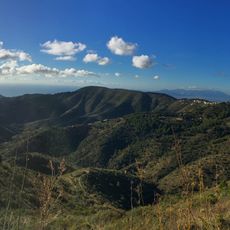
The shelters lie on Cerro de Cabrera near the Cortijo de Cabrera, at 666 m above sea level, within the municipality of Casabermeja. The area covers about 15 hectares between the Mogea and Los Pilones streams, with a sparse cork oak woodland and dense scrub. The rock art was first reported in 1974 by a shepherd, so access and any guided visits should be checked locally in Casabermeja before setting out.
The complex includes a notable structure called 'the atrium' alongside circular patterns, branch-like designs, and abstract compositions in its artwork. These diverse artistic techniques suggest different purposes or phases of use over time.
The community of curious travelers
AroundUs brings together thousands of curated places, local tips, and hidden gems, enriched daily by 94,841 contributors worldwide.