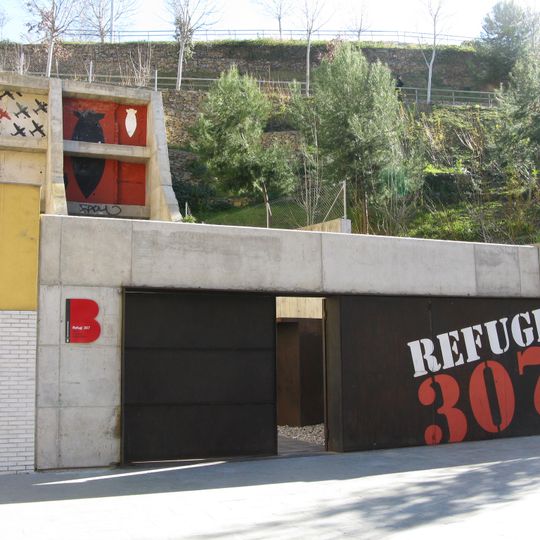
Shelter 307, Civil War air-raid shelter in Poble Sec, Barcelona, Spain
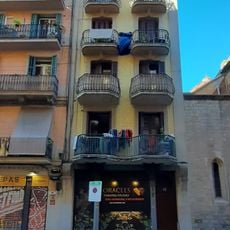
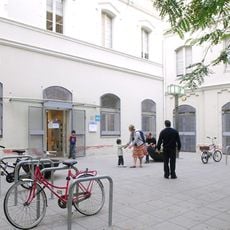
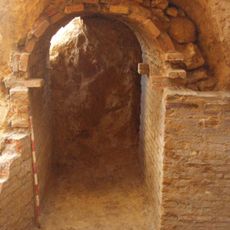
Shelter 307 is a 400-metre network of tunnels dug into Montjuïc from El Poble-sec, with three entrances on Carrer Nou de la Rambla. The galleries are 2.10 metres high and 1.5 to 2 metres wide, mostly lined with lime plaster and brick vaulting. Its zigzag layout and numerous forks were designed to reduce the impact of shrapnel and nearby explosions.
Barcelona had no passive defence against air raids when the project began in autumn 1936; the city council adapted metro passages and built 25 simple shelters, and in June 1937 the Republican Generalitat created the Junta de Defensa Passiva de Catalunya. Poble-sec residents began digging Shelter 307 between summer and autumn 1937, with occasional official funding. After the war the galleries were reused to grow mushrooms, as a glass factory store from 1945 and as housing.
The name comes from the municipal register: this was tunnel number 307. Inside, painted signs still give instructions on how to use the shelter, and the galleries held a small infirmary, a tool store, a children's area and toilets near the entrances. In autumn 2011 the space hosted Subterrànies, a performance about women and the Civil War.
Visits are best planned around guided tours offered regularly by a local museum that explain the facilities and layout in detail. It is helpful to check online beforehand to understand current opening hours and reservation requirements, as groups often need to book in advance.
After the war the galleries stayed open and were reused: they housed a mushroom farm, served as a warehouse for a glass factory from 1945, and were even used as a dwelling. In autumn 2011 the space hosted Subterrànies, a performance about women and the Civil War.
The community of curious travelers
AroundUs brings together thousands of curated places, local tips, and hidden gems, enriched daily by 94,962 contributors worldwide.