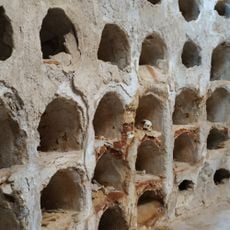
Torre Ciega, Roman burial tower in Cartagena, Spain
Torre Ciega is a first-century BCE Roman burial tower outside Cartagena's historic centre. Its exterior is opus reticulatum: small pyramid-shaped andesite stones from nearby Cabezo Beaza set into fresh opus caementicium mortar, giving a diamond-lattice surface. The lower body's corners are reinforced with small limestone blocks topped by a moulding matching the base.
The monument was built in the first century BCE as a burial place for a prominent Roman official. It belonged to a large necropolis that developed over generations and reflected the prominence of the region's wealthiest families.
The monument marks the edge of an ancient cemetery where wealthy families chose to bury their dead along an important road into the city. Visitors can observe how Romans expressed status and family identity through these monumental tombs.
The tower stands at an accessible location and is visible from outside, though visitors seeking detailed information should visit the city's Archaeological Museum. It helps to arrive early in the day to explore the site without crowds and get the best views of the stonework details.
The exterior is opus reticulatum: small pyramid-shaped andesite stones from Cabezo Beaza pressed into fresh mortar, with limestone blocks reinforcing the lower corners. Old engravings record a now-illegible inscription naming Titus Didius, proconsul of Hispania Citerior in 94 BCE.
The community of curious travelers
AroundUs brings together thousands of curated places, local tips, and hidden gems, enriched daily by 93,472 contributors worldwide.