Salvatierra Castle, Medieval castle in Calzada de Calatrava, Spain
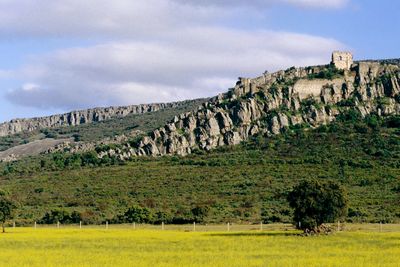
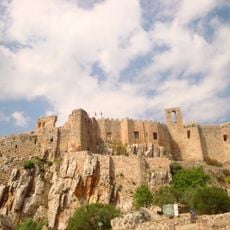
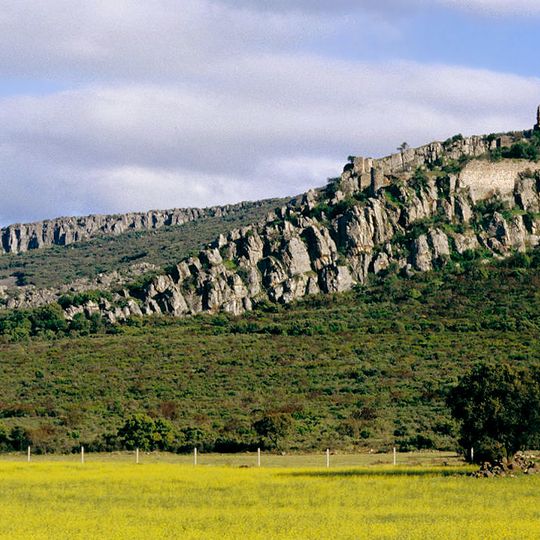
Salvatierra Castle is a stone fortress standing on a hillock at the foot of Mount Atalaya, featuring defensive walls and multiple structures arranged across the elevation. The layout shows the typical design of a medieval fortification built for strategic control.
The castle's origin is uncertain: some authors place its Islamic construction in the 10th–11th centuries, others go back to Roman times. In 1198, after the defeat at Alarcos, Master Martín Pérez de Siones took it with 400 knights and 700 foot soldiers, and the Order of Calatrava moved its convent and headquarters there, calling itself the Order of Salvatierra. The Almohads seized it in 1211, before Las Navas de Tolosa, and the Christians retook it around 1225–26.
The castle's name, Salvatierra, means "saving castle" in Spanish, a reference to its role as a refuge for the Order of Calatrava after the defeat at Alarcos in 1195. The order temporarily moved its headquarters here and became known as the Order of Salvatierra. The Almohad caliph Al-Nasir described the castle as "the key to the gates of the cities" in a letter announcing its loss.
The castle stands on a small hillock at the foot of the volcanic Mount Atalaya, about 5 km from Calzada de Calatrava in the south of Ciudad Real province. The CR-504 runs between it and the castle-convent of Calatrava La Nueva, and one of the main natural routes across Sierra Morena passes close by. Approach on foot from the surrounding tracks; the ridge is steep and rocky.
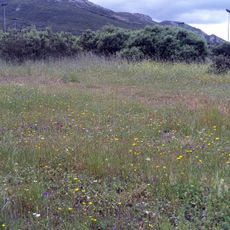
The castle stands opposite Calatrava la Nueva, the Order of Calatrava's headquarters, with the CR-504 road running between the two. In 1211 the Almohad caliph Al-Nasir camped his army on the plain of Salvatierra before the Battle of Las Navas de Tolosa, but the Christians avoided besieging the castle and met him in open battle instead.
The community of curious travelers
AroundUs brings together thousands of curated places, local tips, and hidden gems, enriched daily by 93,519 contributors worldwide.