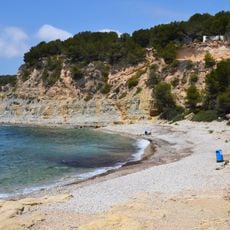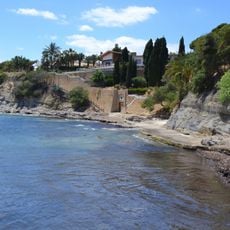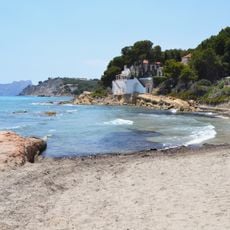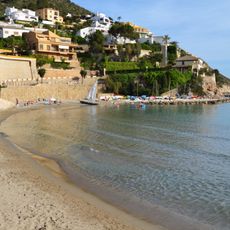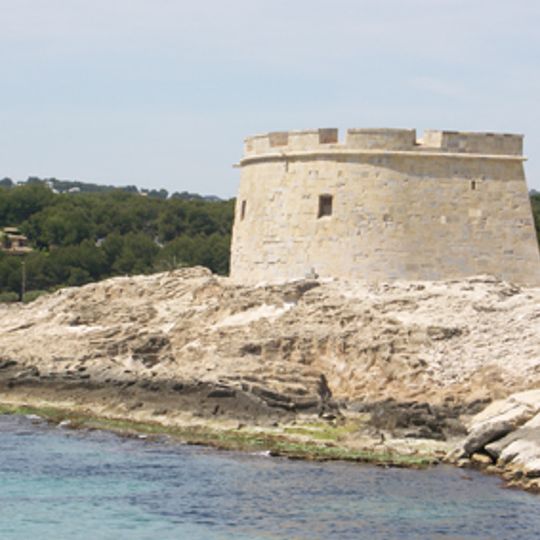
Castell de Moraira, Coastal fortress in Moraira, Spain.
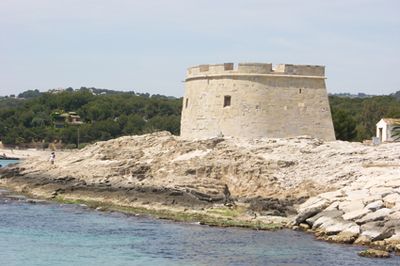
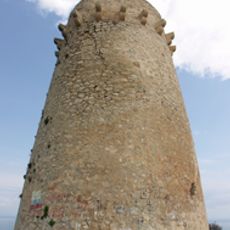
Castell de Moraira is a small fort with a semicircular south facade and a north entrance that was once reached across a moat by a drawbridge. Its walls, about 10 metres high, are built of local stone and topped by seven embrasures for cannon. Inside, three naves are separated by two thick walls, covering just over 200 square metres.
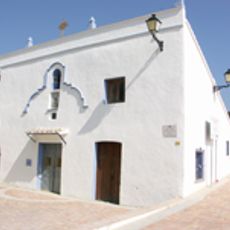
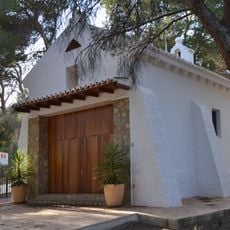
Construction was already under way in 1741 under the direction of Nicolás Bodin, and the Bourbon coat of arms over the door is dated 1742, likely the year of completion. The fort replaced earlier failed projects to protect the Teulada coast from Berber pirates who raided as far as the town itself. It remained in service into the mid-19th century; the idea that the British destroyed it around 1801 is contradicted by a keeper still living in the mid-20th century. From 1875 to 1878, stone blocks from the castle were reused in the ermita de la Virgen de los Desamparados.
The entrance displays royal heraldry from the Bourbon dynasty, a reminder of Spanish royal authority. The fortress design reflects military architecture typical of Spanish coastal fortifications and remains a landmark of local identity.
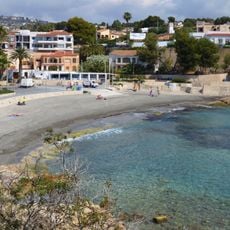
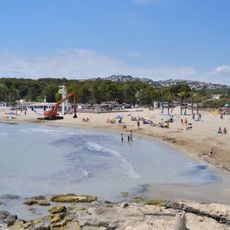
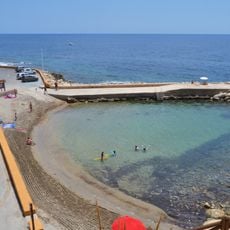
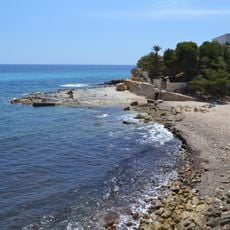
The fort stands on a rocky rise above l'Ampolla beach, reached on foot from the beach and the bay of Moraira. The entrance is on the north side, where a moat and drawbridge once controlled access. The interior covers just over 200 m², so the visit is short; the small cistern of the same period lies a few metres east of the fort.
A small rectangular cistern with a sandstone ashlar vault stands a few metres east of the fort, built at the same time to store water for the garrison. The drawbridge once crossed a moat on the north side; a thick wooden fragment sheathed in iron plate was found during restoration.
The community of curious travelers
AroundUs brings together thousands of curated places, local tips, and hidden gems, enriched daily by 95,680 contributors worldwide.