Castle Calatravo, Medieval castle in Alcañiz, Spain
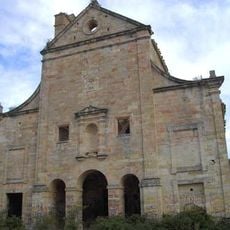
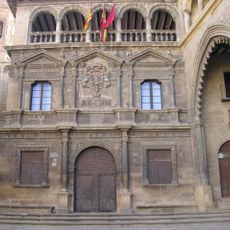
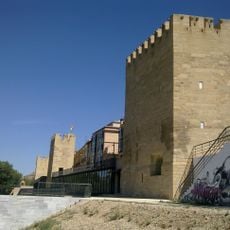
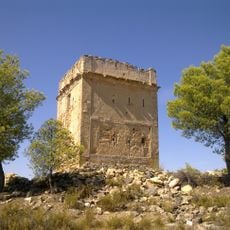
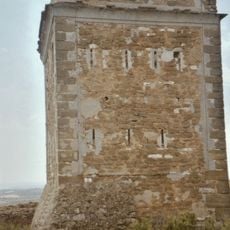
The Castle of the Calatravos rises on a hill above Alcañiz and combines a fortress with a palace. Its oldest rooms, in the northeast, are the keep and the chapel, built in the late 12th and early 13th centuries. A cloister and rooms around it were added in the 14th century, and the 18th-century façade, flanked by two square towers, belongs to the Palace of the Commanders.
Alfonso II of Aragon granted the castle to the Order of Calatrava in 1179, making it the seat of the encomienda. In 1411–1412 the Aragonese parliament met here and named the nine compromisarios who chose a new king, the Concordia de Alcañiz. The castle was later a palace, prison, barracks and cemetery; since 1968 it has housed a Parador.
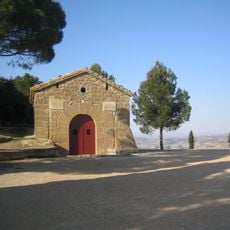
The keep's early 14th-century linear Gothic murals depict jousting and chivalric scenes rather than royal biography. In the chapel stands the alabaster tomb of Juan de Lanuza, commissioned from Damián Forment in 1537. The castle has housed the Parador de la Concordia since 1968, named after the 1411–1412 Concordia of Alcañiz held here.
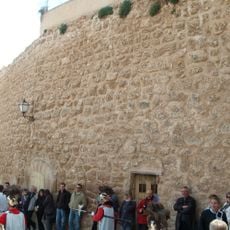
The castle has housed the Parador de la Concordia since 1968, first in the 18th-century Palacio de los Comendadores. The complex is reached by a 19th-century ramp and path along the wall; the keep and chapel stand in the oldest northeast sector. Restoration work between 1992 and 1997 added an assembly hall and restored the Lanuza tomb.
The alabaster tomb of Juan de Lanuza in the chapel was commissioned from Damián Forment in 1537. Forment was the sculptor behind the main altar of the Basilica of El Pilar in Zaragoza. The tomb was restored between 1992 and 1997 during works promoted by the Government of Aragon.
The community of curious travelers
AroundUs brings together thousands of curated places, local tips, and hidden gems, enriched daily by 95,285 contributors worldwide.