San Jeroni de la Murtra, Gothic monastery in Badalona, Spain
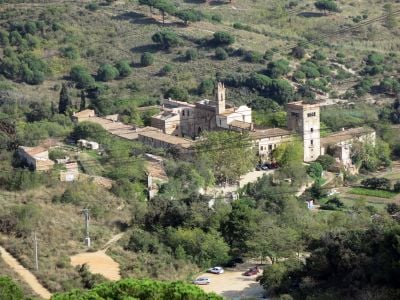
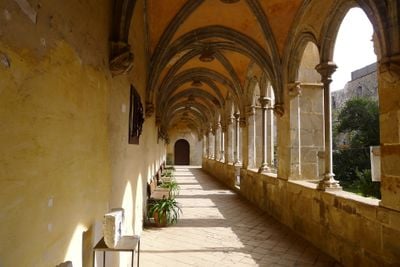
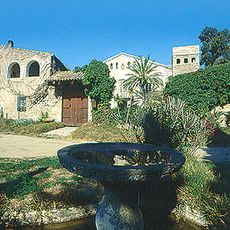
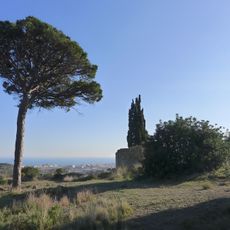
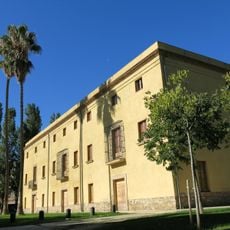
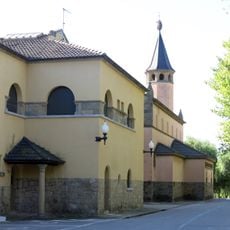
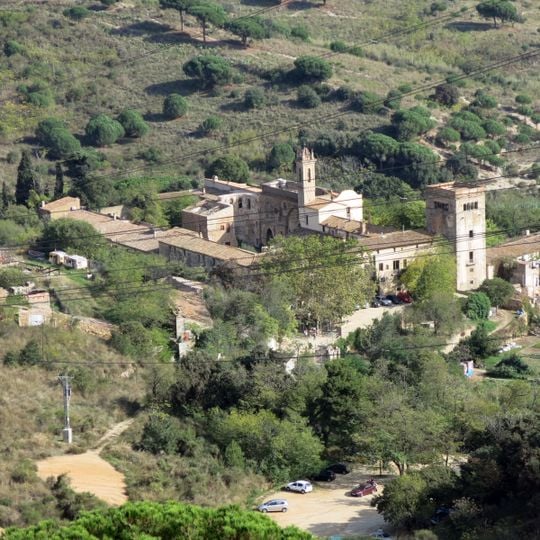
Sant Jeroni de la Murtra is a late Gothic monastery complex in the Canyet area of Badalona, built mainly in the 15th and 16th centuries. Its stone buildings with terracotta tile roofs stand on sloping ground, and a square bell tower with a pyramidal cap rises above the roofline. The cloister has two storeys of ribbed vaults, and its upper floor opens through fifteen segmental arches.
The first community was founded in 1414 near Sant Pere de Ribes, then moved in 1416 when the Barcelona merchant Bertran Nicolau bought the Mas Murtra and obtained a licence from Benedict XIII. Royal patronage followed: John II built the refectory, the Catholic Monarchs funded a cloister wing, and Charles V visited in 1519, 1535 and 1538. Mendizábal's 1835 exclaustration brought fire and looting.
The name comes from the myrtle bush (murtra in Catalan) that still grows in the cloister garden, beside a star-shaped fountain carved in 1502 with lion heads. The cloister's carved corbels carry portraits and coats of arms of benefactors such as the Catholic Monarchs, Charles I, Columbus and Ramon Llull.
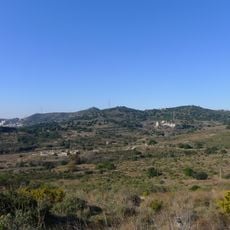
The monastery is generally accessible only on certain days and typically requires advance notice to visit. It makes sense to check opening times before traveling and plan your route, since it is located in a hilly area outside the main town.
The monastery received important royal visitors in 1493 who were celebrating a major geographical exploration that had just returned to Europe. This event links the site to a moment that would reshape world history.
The community of curious travelers
AroundUs brings together thousands of curated places, local tips, and hidden gems, enriched daily by 93,498 contributors worldwide.