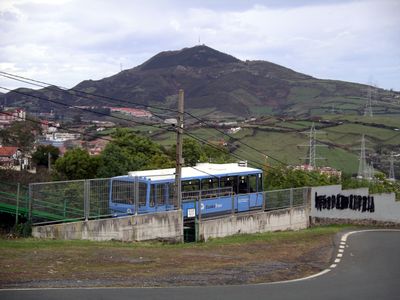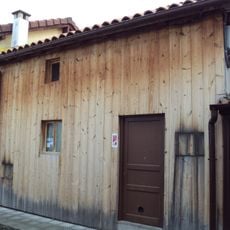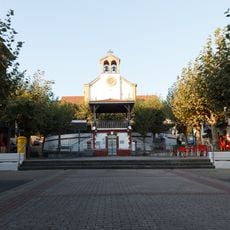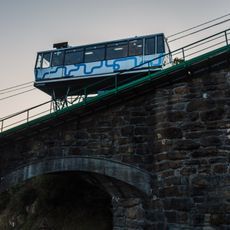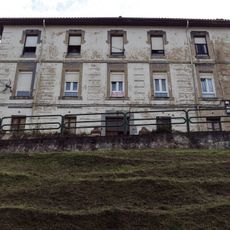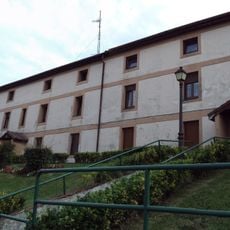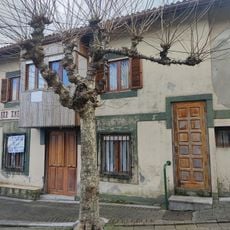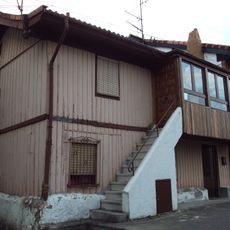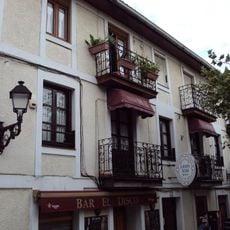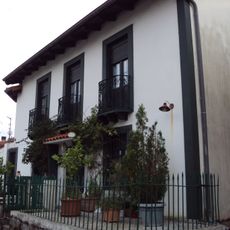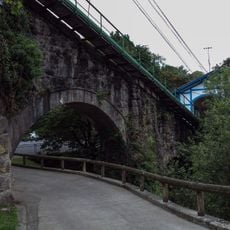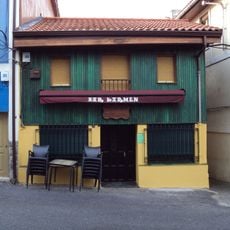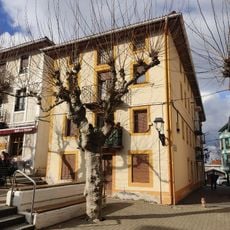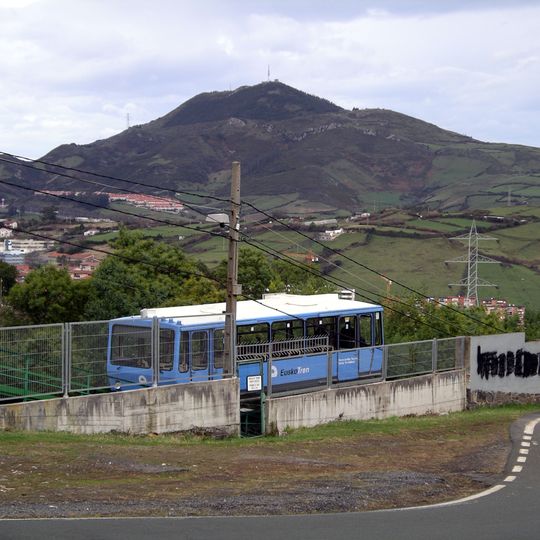
Larreinetako funikularra, Funicular railway in Valle de Trápaga-Trapagaran, Spain.
The Larreinetako funicular connects the downtown area with an upper neighborhood via a 1,179-meter (3,868-foot) single-track route that includes a passing loop. The system uses counterbalanced cabins to transport passengers and historically also carried freight between the two terminals.
Authorized in 1912, construction began in 1920 and the funicular opened in 1926 to meet growing transportation needs tied to the region's mining industry. It became central to the development of the Triano mountain range's mining operations and the infrastructure supporting local mining communities.
The funicular is protected as an industrial heritage site by the Basque government and reflects the mining traditions of the region. It served as a vital transport link for workers and residents who needed to move between different elevation levels of the community.
The lower station, Trapagaran, stands in the La Escontrilla neighbourhood and is served by Bizkaibus lines that stop at the station. Services run about every 30 minutes for most of the day, and tickets can be bought at the stations or paid with a Barik card. From Larreineta, a shuttle bus links the upper station with the La Arboleda neighbourhood, run by Euskotren Autobusa since 2021.
The track bends to the right to reach the upper station, a curve few European funiculars have, as most run in a straight line. The engineer Francisco Guinea led the works, continuing a station project by the architect Diego Basterra, and the Swiss firm Von Roll installed the traction system.
The community of curious travelers
AroundUs brings together thousands of curated places, local tips, and hidden gems, enriched daily by 95,530 contributors worldwide.