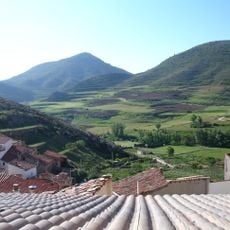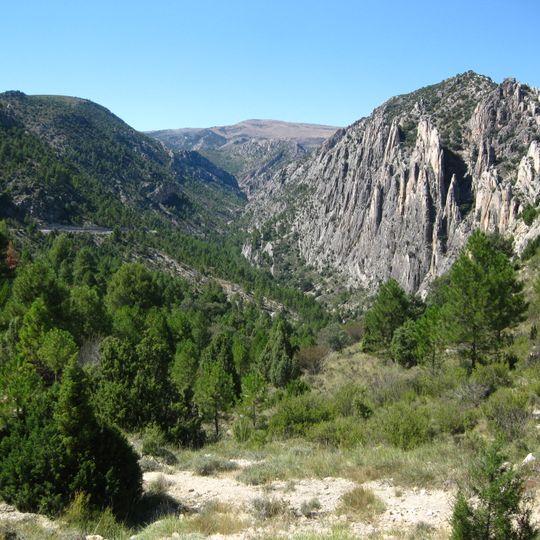
Órganos de Montoro, Natural monument in Villarluengo and Montoro de Mezquita, Spain.
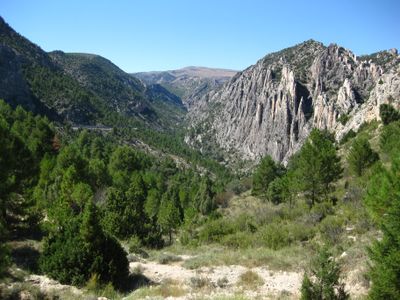
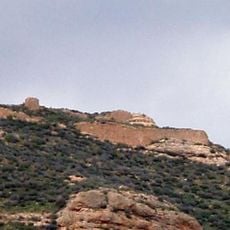
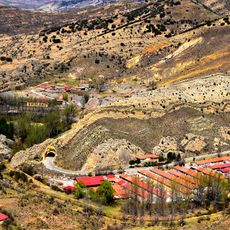
Órganos de Montoro is a limestone formation near Villarluengo that rises about 200 meters high with distinctly layered vertical structures. The rock walls are composed of several parallel columns that give the formation its distinctive appearance.
The structure formed during the Cretaceous period through water and wind erosion acting on limestone layers. This process created the vertical columns and fissures visible today over millions of years.
The rock formation earned its name from its resemblance to organ pipes, a comparison that has shaped how locals and visitors perceive this landscape. People come to observe the vertical rock faces and appreciate the geological artistry they display.
The natural monument covers 187.60 hectares between the Guadalope river, at 800 m, and the peña de los Órganos, at 1,183 m. Access is from Villarluengo and Ejulve, in the Maestrazgo and Andorra-Sierra de Arcos districts. The rock walls hold little vegetation outside the fissures, and the climate is continental mountain, with hot summers and very cold winters.
The limestone strata here are so steep that geologists named a whole rock unit after the place: the Órganos de Montoro Formation, part of the Iberian System. It consists of grey detrital and micritic limestones with planar or wavy bedding, and the site also forms a synclinal structure with a gypsum core from the terminal Cretaceous.
The community of curious travelers
AroundUs brings together thousands of curated places, local tips, and hidden gems, enriched daily by 94,018 contributors worldwide.