Modelo Prison, former Spanish prison
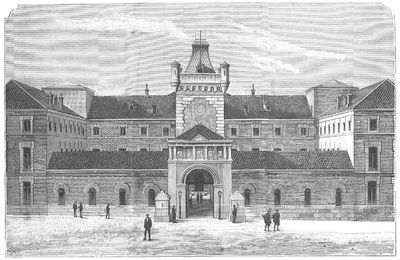
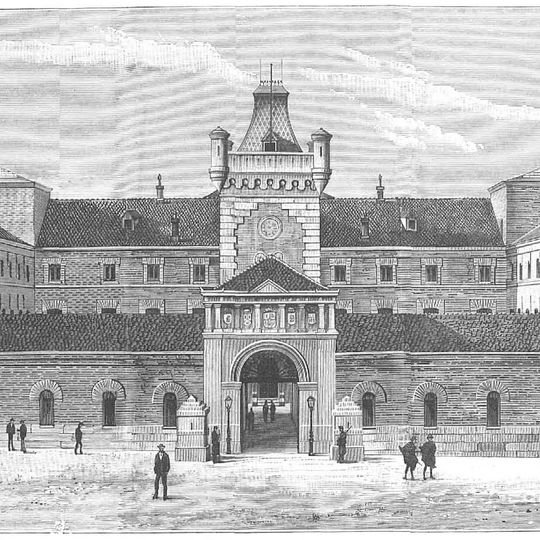
Modelo Prison was a male detention facility in the Moncloa-Aravaca district of Madrid, opened in 1884. The building was arranged around a central observation point, with several cell blocks radiating outward, thick stone walls, and small barred windows on each level.
Modelo Prison was built to replace the older Saladero Prison, a facility that dated back to the 18th century, and opened in 1884. It suffered heavy damage during the Spanish Civil War and was demolished in 1939.
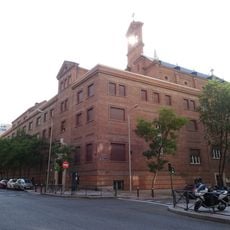
The name 'Modelo' reflected the reformist ambition behind its design, meant to showcase a new approach to detention in Spain. Today, a section of its outer wall still stands along the street, where passersby can see the original stonework up close.
The site is in the Moncloa-Aravaca district and is easy to reach on foot from the surrounding streets. There are no formal visitor facilities on the grounds, so a brief stop to see the remaining wall from the outside is the most practical approach.
The building was designed according to the panopticon principle developed by British philosopher Jeremy Bentham, where a single guard could observe all cells without being seen. This layout was rare in Spain at the time and made the facility a reference point for later construction across the country.
The community of curious travelers
AroundUs brings together thousands of curated places, local tips, and hidden gems, enriched daily by 60,000 contributors worldwide.