Penyagolosa, Natural park in Castellón Province, Spain
Penyagolosa is a natural park of 1,094.45 hectares in the municipalities of Vistabella del Maestrazgo, Villahermosa del Río and Chodos, declared in 2006. Its limestone massif rises to 1,814 metres at the summit, the second-highest peak in the Valencian Community, with deep ravines on the Mediterranean side and karst forms such as the Poljé de Vistabella.
The Valencian government declared Penyagolosa a natural park on 7 April 2006, covering 1,094.45 hectares across Vistabella del Maestrat, Vilafermosa and Xodos. Before that, a Natural Resources Management Plan had been approved for 26,491 hectares in five municipalities. In 2019 the government bought a 150-hectare estate reaching the summit, including the Mas de Sanaüja, for 1.14 million euros.
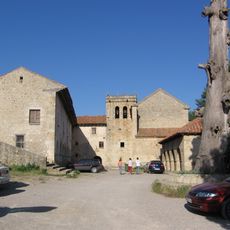
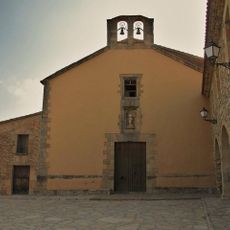
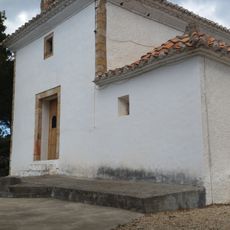
The Sanctuary of Sant Joan de Penyagolosa, a Neoclassical complex with origins in the 14th century, is the focus of the annual romeria of the Pelegrins de les Useres, held on the last Friday of April. The Confraria de Sant Joan dates from the 17th century. The name Penyagolosa probably derives from pinna (mountain) and lucosa (wooded), as recorded in the 1213 donation of Culla to the Order of the Temple.
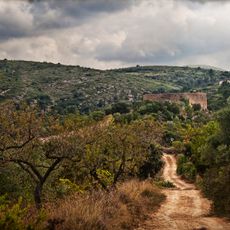
The park was declared in 2006 and covers 1,094.45 hectares across Vistabella del Maestrat, Vilafermosa and Xodos. In 2019 the Generalitat Valenciana bought a 150-hectare estate reaching the summit, where the Mas de Sanaüja is to house an interpretation centre. Trails climb from these villages; the northern slope facing the Mediterranean is the steepest.
The massif holds one of the southernmost bilberry (Vaccinium myrtillus) populations in the Iberian Peninsula, and its Pyrenean oak stands are among the few in the Valencia region, alongside groves in the Sierra de Pina de Montalgrao and the Sierra de Espadán.
The community of curious travelers
AroundUs brings together thousands of curated places, local tips, and hidden gems, enriched daily by 95,031 contributors worldwide.