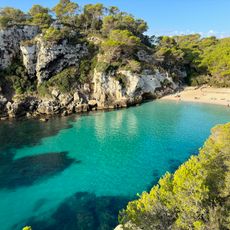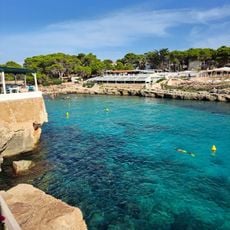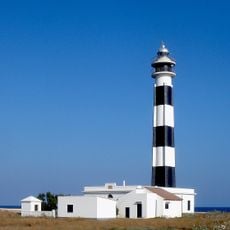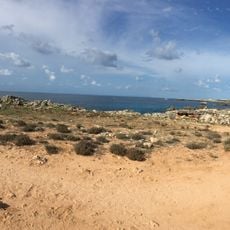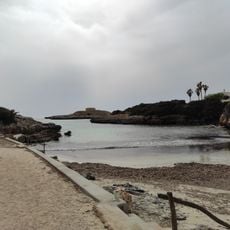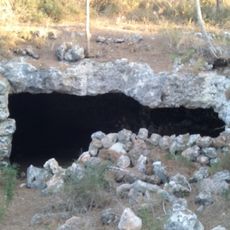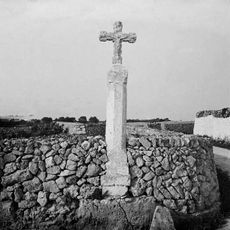
Son Catlar, Archaeological site in southern Menorca, Spain.
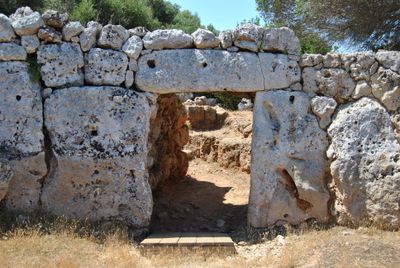
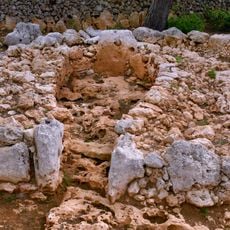
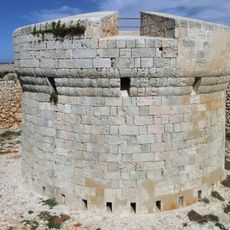
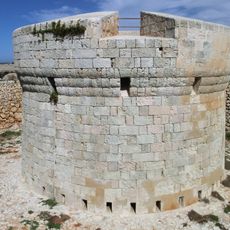
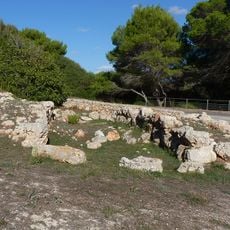
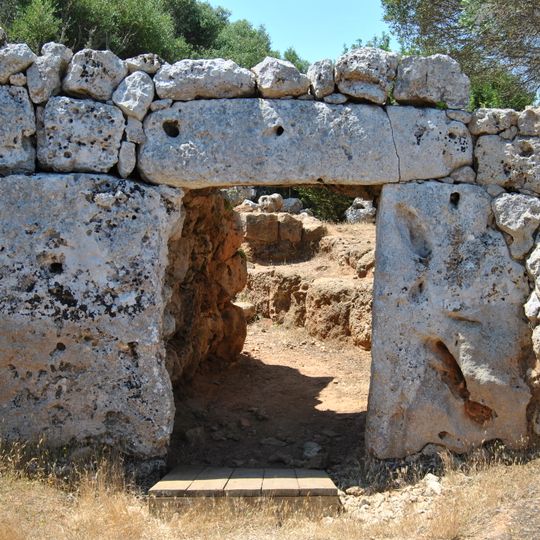
Son Catlar is a talayotic settlement of 4.4 hectares enclosed by a dry-stone wall up to 3 metres high and 6 metres thick, with a perimeter of about 900 metres. Inside stand three talayots, a taula enclosure with two entrances and a broken central taula, and the foundations of many buildings. A hypogeum with niches lies near the entrance, and a carved stele stands outside the west wall.
Son Catlar began in the late Bronze Age and flourished in the Iron Age, expanding sharply between the 3rd and 2nd centuries BCE to become one of Menorca's largest settlements alongside Trepucó and Torre d'en Galmés. Its wall was reinforced at the end of the 3rd century BCE during the Second Punic War, with eight square towers added. Parts were destroyed during the Roman conquest of 123 BCE, yet occupation continued into Islamic times.
The name Son Catlar comes from the Catalan word for a hilltop lookout, and the site is still used for archaeological research: since 2014 the University of Alicante's Modular Project has studied Punic influence here. In 2021, Roman military items from around 100 BCE, including surgical instruments and a bronze spatula, were found at one of the gates.
Son Catlar lies 8 km south of Ciutadella, reached via the Camino de Torre Saura; a car park is available for visitors. The site was acquired by the state in 2018 and is registered as an archaeological monument under number ARI-55-0000820. The perimeter wall runs about 870 m, so allow time to walk its full circuit.
Son Catlar is the only prehistoric settlement on Menorca with a complete Cyclopean dry-stone wall, and its northwest stretch holds casemates found nowhere else on the island. A second gate, the elbow-shaped portal, was only discovered in 2019. Outside the west wall stands a monolith carved with anthropomorphic figures.
The community of curious travelers
AroundUs brings together thousands of curated places, local tips, and hidden gems, enriched daily by 94,226 contributors worldwide.