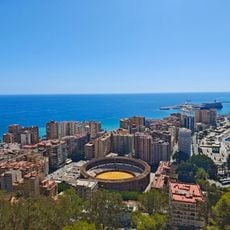
Paseo de Reding, street in Málaga, Spain
The Paseo de Reding is a wide avenue in central Malaga with buildings from the 1800s that show different architectural styles. The street connects the Plaza de la Malagueta with western parts of the center and runs for about 450 meters.
From the mid-19th century, simple two-storey houses were built along the Paseo de Reding. In the 1870s the architect Gerónimo Cuervo designed a group of uniform single-family homes, and later villas and hotels such as the Hotel Miramar (1920s) attracted architects Joaquín de Rucoba, Julio O'Brien and Fernando Guerrero Strachan. The promenade is named after Swiss general Teodoro Reding, governor of Málaga who ordered the demolition of part of the Arab walls to create the Alameda Principal and Alameda de Colón.
The promenade is named after a Swiss general who defended the city during the independence wars and later served as military governor. Walking here, you see buildings that show how wealthy families of the 1800s designed their homes with regional and modern styles.
The Paseo de Reding runs west to east for 450 metres through the narrow strip between the slope of Mount Gibralfaro and the sea, forming the boundary between La Malagueta to the south and Campos Elíseos to the north. Walking it, the monumental buildings sit on the northern side (Museo del Patrimonio Municipal, Casas de Félix Sáenz) and on the southern side (Hospital Noble, La Malagueta bullring, Palacio de la Tinta, Palacio Miramar).
The Hotel Miramar was designed in the 1920s on the Paseo de Sancha side, one of the most celebrated buildings of that decade, by architect Fernando Guerrero Strachan among others. The avenue itself marks the boundary between La Malagueta to the south and Campos Elíseos to the north. Look for the wooden glazed miradores on the balconies of numbers 15 and 17-19.
The community of curious travelers
AroundUs brings together thousands of curated places, local tips, and hidden gems, enriched daily by 94,560 contributors worldwide.