Parc de Can Boixeras, Art Nouveau palace and park in L'Hospitalet de Llobregat, Spain
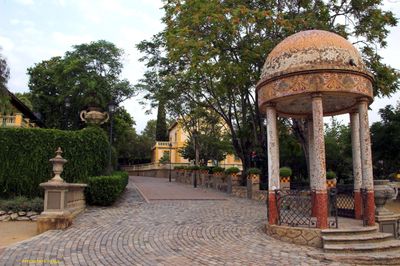
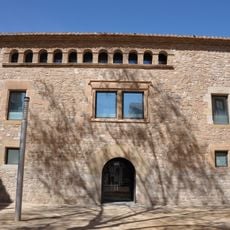
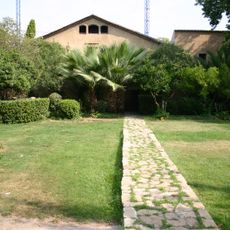
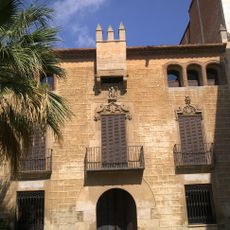
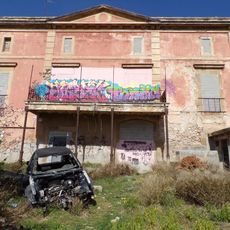
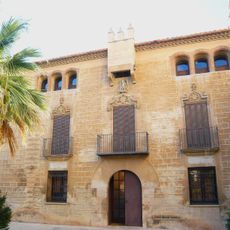
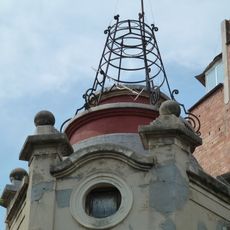
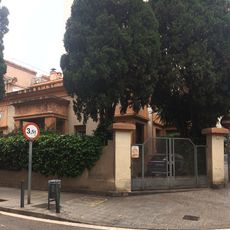
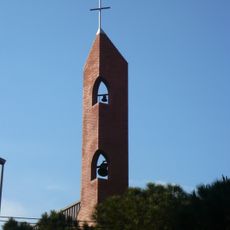
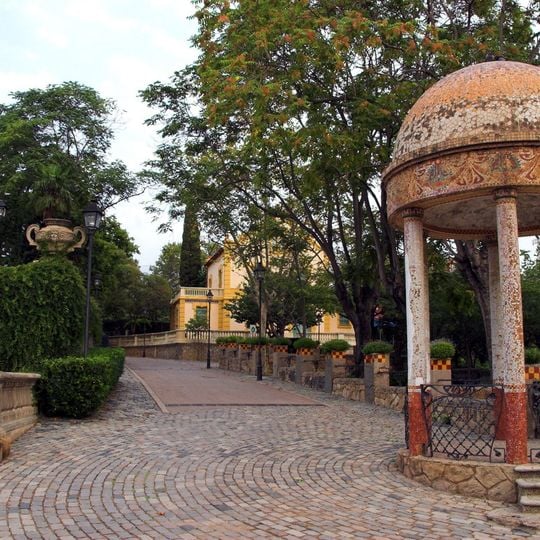
Can Buxeres is a historic estate in L'Hospitalet de Llobregat comprising a summer residence, a farmhouse and gardens. The residence, a neoclassical building with a porch added in the 1920s, stands beside a brick neo-Mudéjar tower built in 1875 as a water mill. The gardens feature a circular modernist temple with a mosaic-covered dome supported by six concrete columns, and a perimeter wall of stone and brick with a 1911 entrance gate on the Carretera d'Esplugues.
The estate began as Ca n'Alemany or Casa Alta, held by Josep d'Alemany i Salla, who received the title of ciutadà honrat de Barcelona from Philip V in 1741. In 1875 Joaquima Casanovas built a brick Neo-Mudéjar tower used as a water mill. Lluís Buxeres i Abat acquired the property in 1877, and in 1901 commissioned architect Antoni Serrallach to convert it into a summer residence; Manuel Joaquim Raspall designed the garden from 1906, completed in 1911. The city bought the estate in 1968 for 32 million pesetas and declared it a municipal park on 8 November 1972.
The estate's name comes from the Buxeres family, who owned it from 1877; Lluís Buxeres i Abat bought it and his son Francesc founded the Buxeres Germans i Font trading house, importing cocoa and coffee from Fernando Poo (now Bioko). Around 1905 the family brought a boy named Amadeu from the island, who worked as a servant and became well known in L'Hospitalet for running errands and doing the shopping.
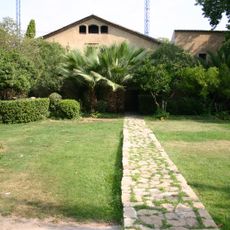
The estate became municipal property in 1968 and was declared a municipal park on 8 November 1972. The garden is laid out in terraces divided by balustrades decorated with vases and cups, so expect steps between levels. The main gate on the Carretera d'Esplugues, dated 1911, has Corinthian pilasters; a railway line runs on the wall above the garden.
The modernist templet in the garden is a circular pavilion with a dome on a drum carried by six concrete columns, covered in tiny glazed ceramic mosaic pieces. The cladding was the work of master builder Gonçal Batlle i Monrós with a bricklayer named Badosa. A wrought-iron railing closes it off, and steps lead up to it.
The community of curious travelers
AroundUs brings together thousands of curated places, local tips, and hidden gems, enriched daily by 94,135 contributors worldwide.