Bellvís Castle, Medieval castle in L'Hospitalet de Llobregat, Spain.
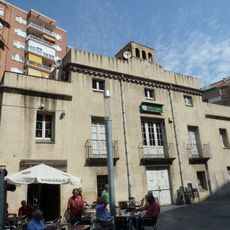
Bellvís Castle, also called La Torrassa, stands at Ronda de la Torrassa 123-129. Excavations in 2006-2008 and 2015 uncovered a 12th-13th century building with a 5 m high, 20 m long wall pierced by six arrow slits on the upper floor, built of squared stones set in lime mortar. An 18th-century remodelling turned it into a farmhouse, later divided into flats, with a square tower at one end and a rock-cut cellar.
A castle on the slope between the Samontà and the Marina is first documented in the 10th century; known lords include Pere de Bellvís (1144) and Guillem de Bellvís (1188). The Bellvís sold the castle and its tithes and settled in Valencia as barons of Bèlgida. The tithe passed to the Cartoixa de Montalegre, was sold in 1688 to Joan d'Alòs for 5,500 lliures, and in 1902 the estate was divided into building plots.
The castle shows how defensive structures gradually transformed into living spaces, reflecting practical choices people made to adapt their homes over time. Visitors can still observe how the thick walls and firing openings were gradually modified to suit more peaceful purposes.
The building stands at Ronda de la Torrassa 123-129, integrated into the urban grid of the Torrassa neighbourhood after the 1902 plot sale. Excavations in 2006, 2007, 2008 and 2015 uncovered the 12th-13th century walls, and in 2021 the city announced a 1.7 million euro rehabilitation campaign. Access has remained restricted while works stall, so check locally before visiting.
During the Spanish Civil War, the underground chambers served as an air-raid shelter for local residents fleeing bombardment. This unexpected second life shows how an ancient structure remained useful to people centuries after its original military purpose.
The community of curious travelers
AroundUs brings together thousands of curated places, local tips, and hidden gems, enriched daily by 94,444 contributors worldwide.