Amposta suspension bridge, Suspension bridge in Amposta, Spain
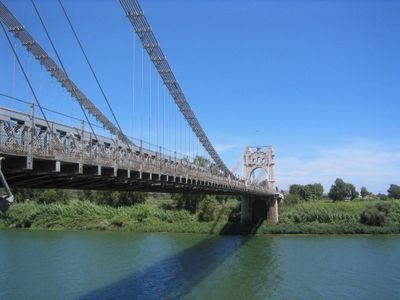
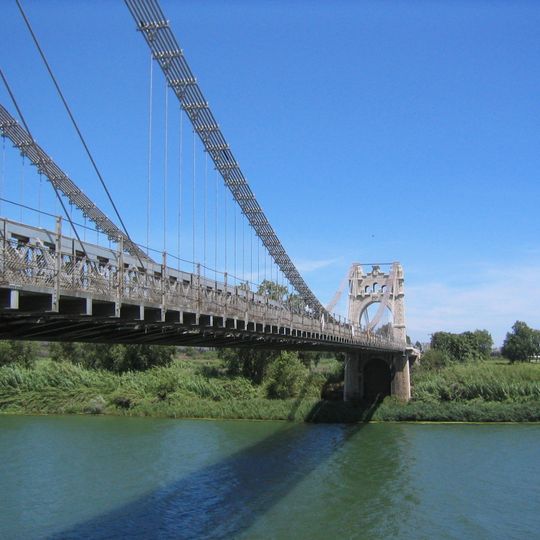
Amposta suspension bridge crosses the Ebro with a 134-metre span and stands 24 metres high. Its two stone pylons, modelled on German historicist triumphal arches, carry a metal structure supported by cables. The deck is about 8–10 metres wide, with one vehicle lane each way and two pedestrian walkways.
The bridge was built between 1915 and 1921, replacing the boat crossings that had been the only way to cross the Ebro at Amposta. The first project of 1907 was rejected, and the foundation stone was laid on 15 August 1915. It was designed by engineer José Eugenio Ribera and had no official inauguration. In 1938 Italian Legionary aviation bombed it, and the structure collapsed; it was reopened on 4 October 1939.
The bridge is listed as a Cultural Asset of Local Interest. Its name comes from the town that manages it, Amposta, though the northern end lies in L'Aldea. The stone pillars carry the royal and municipal coats of arms above three openings, and the upper section is flanked by two almost-towers.
The bridge is accessible for vehicles with one lane in each direction and for pedestrians via separate pathways. Plan time to observe the structure while crossing, and be aware that pathway conditions may vary.
The bridge was the second suspension bridge in the world built with reinforced concrete, after Brooklyn Bridge, which inspired its design. Its cables are of two kinds: ten per side rise from anchor points 30 m inland to form the main catenary curve, while perpendicular cables act as hangers along the central span.
The community of curious travelers
AroundUs brings together thousands of curated places, local tips, and hidden gems, enriched daily by 94,460 contributors worldwide.