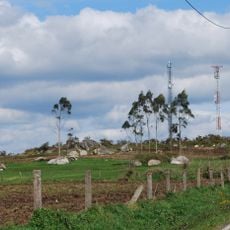
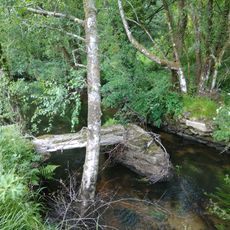
Ancient Roman castra of Cidadela, Roman military camp in Sobrado dos Monxes, Spain.
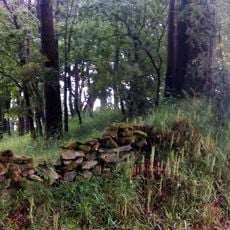
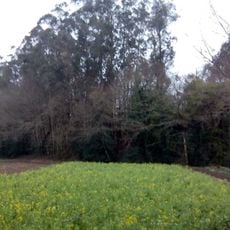
The Roman castra of Cidadela lies on a 480-metre plateau near the Cabalar river, between the parishes of Ciadella (Sobrado) and Vilariño (Vilasantar). Its perimeter wall measured 172 by 140 metres with rounded corners, enclosing 2.4 hectares, with an outer ditch, four gates and watchtowers. Inside stood the Principia, 29.5 by 29.6 metres, and the Praetorio, 38 by 29.6 metres, separated by a wide street. A steel-and-glass shelter covers less than a tenth of the excavated area.
The Cohors I Celtiberorum Equitata civium romanorum, formed in 80 CE, was moved from Mauritania to Hispania in 123 under Hadrian and attached to the Legio VII Gemina, as the Castromao tessera records. The camp was built then on a 480 m plateau near the Cabalar river to guard the Vía XX between Brigantium and Lucus Augusti. The unit held it until 395, when it left for Iuliobriga in Cantabria; Germanic occupation and 19th-century stone robbing followed.
The finds from A Ciadella are mostly kept far from the site, in the Museo Arqueolóxico e Histórico Castelo de San Antón in A Coruña: ceramics, glass, iron and bronze tools, and coins ranging from Domitian (86) to Claudius II (270). The site itself lies between the parishes of A Ciadella (Sobrado) and Vilariño (Vilasantar), and some authors place the mansio Brigantium of the Antonine Itinerary here.
The site sits on a hillside and involves some climbing to view the foundations and walls properly. Sturdy footwear and weather protection are helpful, since much of the area remains open to the elements.
What stands out are the many inscribed roof tiles left behind, revealing how carefully the Romans organized their forces. These carved marks are rare direct messages from people who walked this hilltop nearly 2000 years ago.
The community of curious travelers
AroundUs brings together thousands of curated places, local tips, and hidden gems, enriched daily by 94,922 contributors worldwide.