Cerro de la Encina, Bronze Age archaeological site in Monachil, Spain.
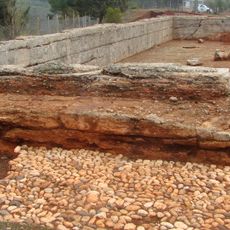
Cerro de la Encina is an Argaric archaeological site on a steep hill and its slopes at 780 metres above sea level, on the right bank of the Monachil River in Monachil, Granada. The settlement was protected by a stone wall with bastions, while its houses were built with rammed earth or adobe walls; most are rectangular or square, but one building has an apse.
The site's stratigraphy, studied by J. J. Eiroa, spans the Chalcolithic-Argaric transition through the Argaric phases to the Late Bronze Age. In its final phase, imports from Cogotas I appear and trade with Tartessos, the Levant and Phoenician colonies increases. Houses of this period are round or oval, about 40 m², and the necropolis has not yet been found.
This place was home to a community for over a thousand years, and the objects found show how people valued their dead. Burials with jewelry and weapons reveal the social differences that existed among residents.
Access to the site is on foot via a hiking trail from Monachil through mountainous terrain. Visitors should wear appropriate footwear and allow time to explore the steep topography comfortably.
Animal bones show that horses were the most common livestock, followed by cattle, goats, and sheep. This combination differed from other settlements in the region and reveals much about life here.
The community of curious travelers
AroundUs brings together thousands of curated places, local tips, and hidden gems, enriched daily by 93,656 contributors worldwide.