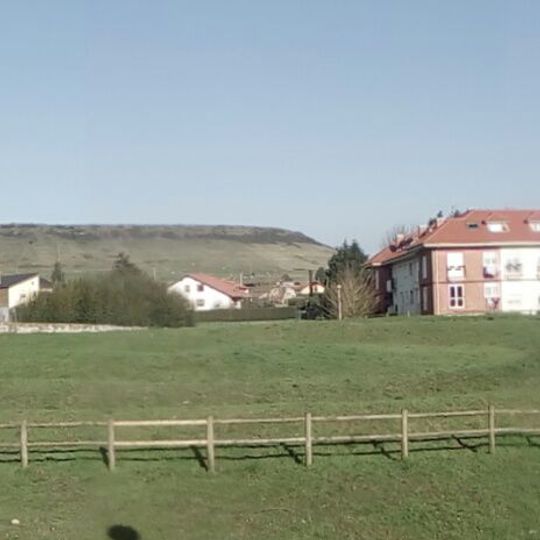
Mota de Trespalacio, Archaeological site in Hinojedo, Spain
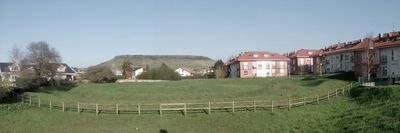
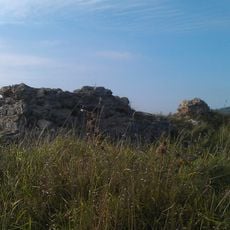
Mota de Trespalacio is an archaeological site featuring a circular earthen mound surrounded by two defensive rings and moats. The structure displays a distinctive pattern of raised earthworks typical of medieval fortifications in this region.
The earthwork mota was likely built between the 10th and 11th centuries. It is a rare defensive type on the Iberian Peninsula, though similar earthwork fortifications are numerous elsewhere in Europe. The site is listed as a Bien Inventariado in Hinojedo, in the Gandara neighbourhood of Suances, Cantabria.
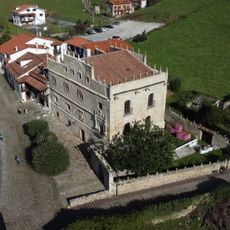
The local name is Trespalacio, singular; modern documents often write Trespalacios, mistaking Tres for the numeral three, but it is the Cantabrian preposition tras, so the name means "behind the palace". A fountain and washhouse behind the Velarde palace, about 700 m away, also carry the name; the reason is unclear, perhaps a prehistoric tumulus once at Trespalacio, destroyed during car park works for the church of San Saturnino around 2000. One of its stone slabs stands in the playground by the car park with a commemorative plaque.
The site preserves visible earthwork structures that can be seen year-round and is accessible through the Gandara neighborhood of Hinojedo in Cantabria. It is best explored on foot with sturdy shoes, as the ground is uneven and can be muddy after rain.
The rings show no visible openings, so access was likely raised, using the space between the earthworks as a flooded ditch. The site is a mota, a defensive earthwork rare on the Iberian Peninsula but common elsewhere in Europe. About 700 m away, a fountain and washhouse also called Trespalacio stand behind the Velarde palace.
The community of curious travelers
AroundUs brings together thousands of curated places, local tips, and hidden gems, enriched daily by 95,279 contributors worldwide.