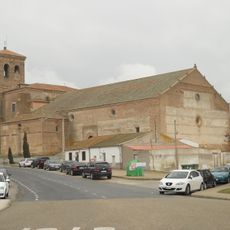
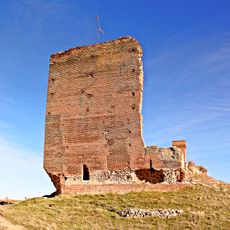
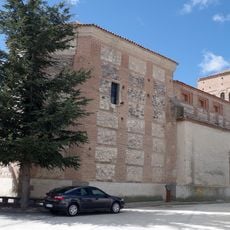
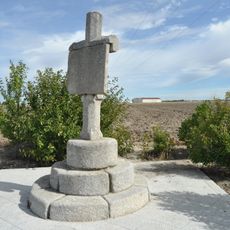
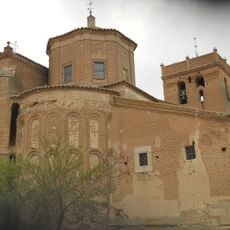
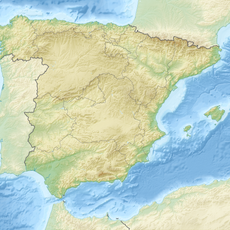
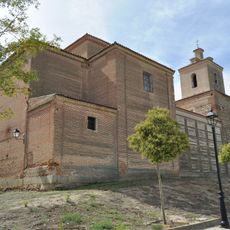
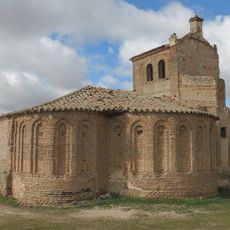
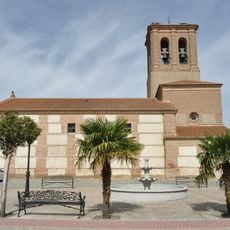
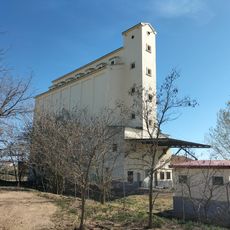
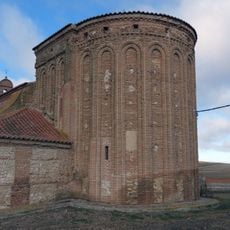
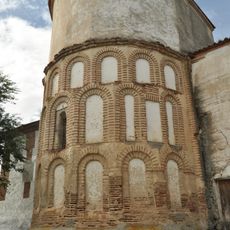
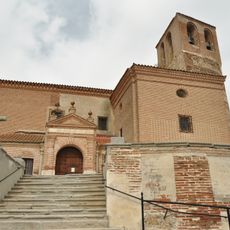
Walls of Madrigal de las Altas Torres, Medieval defense walls in Madrigal de las Altas Torres, Spain
The Walls of Madrigal de las Altas Torres form an irregular, elongated oval perimeter running west to east, not a circle as old 1864 and 1873 plans suggested. They enclose 39.04 hectares over 2,300 metres, with 23 of the original 80 towers surviving, averaging about 12 metres high and reaching 20 metres at the Alcázar and San Vicente gates. The ramparts are roughly 3 metres thick, built of rammed earth with brick uprights and bands framing mortar panels.
Construction began in the early 13th century and continued throughout the century. In 1302, at the Cortes de Medina, Fernando IV ordered its demolition because it had been raised without the mandate of the Concejo de Arévalo, under whose jurisdiction Madrigal fell; the wall was not demolished. It was declared a Monumento Histórico-Artístico on 3 June 1931.
The four gates were named for the towns they faced: Medina to the north, Arévalo to the east, Cantalapiedra to the west, and Peñaranda to the south, a gate that has since disappeared. The wall's Mudéjar masonry mixes brick with rammed-earth panels, and hollow towers with upper chambers recall Muslim models.
The best-preserved sections are located in the southwestern part of town and are accessible year-round. A walk along the walls offers good views and lets you explore the structure from the outside.
The wall was built without the permission of the Council of Arévalo, under whose jurisdiction Madrigal fell. In 1302, at the Cortes of Medina, Ferdinand IV ordered it demolished, but the wall was never torn down. Of the original 80 towers, 23 remain, with an average height of about 12 metres.
The community of curious travelers
AroundUs brings together thousands of curated places, local tips, and hidden gems, enriched daily by 93,559 contributors worldwide.