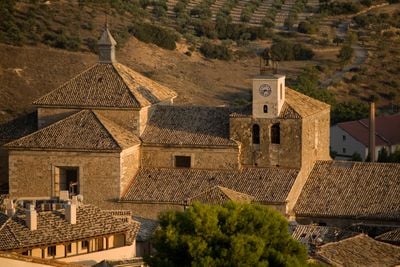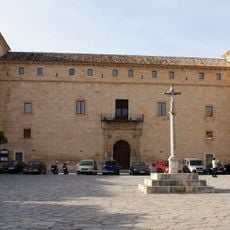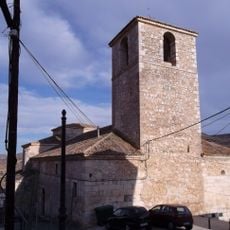
Colegiata de Pastrana, Collegiate church in Pastrana, Guadalajara Province, Spain
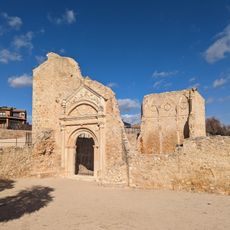
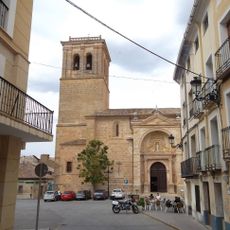
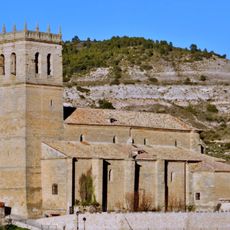
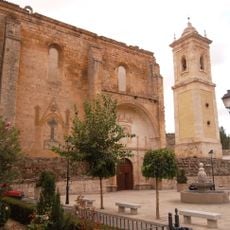
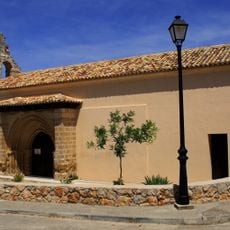
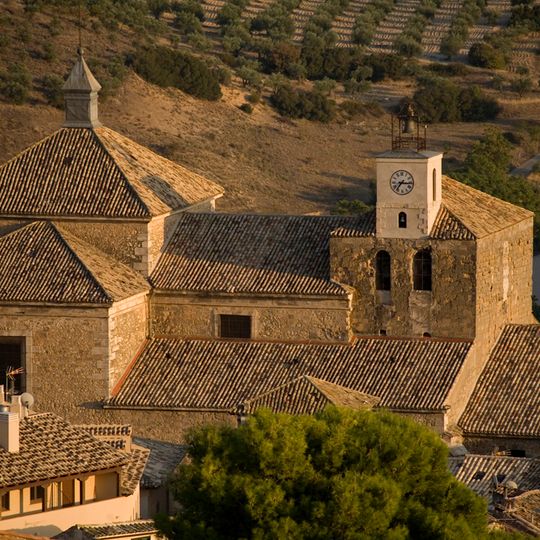
The Colegiata de Pastrana is a church with three wide naves opening into a large crossing and a short presbytery. The 17th-century chancel is taller than the rest of the church, a difference in height visible from the interior. The north wall has a Gothic portal with a ogee arch, two pilasters and pinnacles.
The church traces back to a 13th-century Romanesque temple built by the Calatrava knights, with later reforms in the 14th or 15th century. In 1569 Ruy Gómez de Silva, first Duke of Pastrana, obtained a papal bull to make it a collegiate church and added a Gothic chevet. Between 1626 and 1639 Archbishop Pedro González de Mendoza had it rebuilt and enlarged by Carmelite architect Alberto de la Madre de Dios.
The museum keeps a set of funeral furnishings made for the princess of Éboli in the 17th century: a catafalque, twelve large and twelve small candlesticks, eight scepters, crosses, censers and priestly vestments. A 17th-century ebony and gilt-bronze reliquary cabinet is said to hold the Rule of the Franciscan order written on parchment by Saint Francis himself.
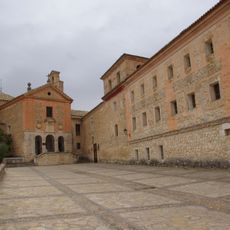
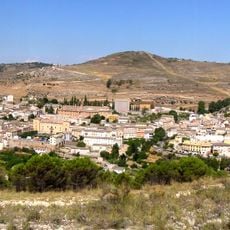
The church stands in the historic centre of Pastrana, in the province of Guadalajara. The visit combines the temple and the parish museum, whose collection of Flemish tapestries was recently expanded. The entrance is through the north doorway, a Gothic-style opening with a ogee arch flanked by pinnacles.
The museum's six Flemish tapestries of wool and silk, four dated 1472–1475 and attributed to Paschier Grenier's workshop in Tournai, depict Portuguese expeditions in North Africa, including the battle of Alcazarquivir and the taking of Tangier, woven after cartoons by the Portuguese painter Nuño Gonsalves.
The community of curious travelers
AroundUs brings together thousands of curated places, local tips, and hidden gems, enriched daily by 95,698 contributors worldwide.