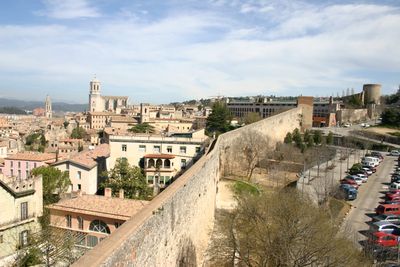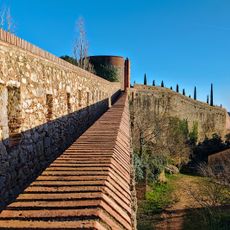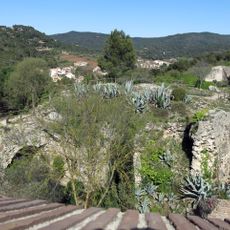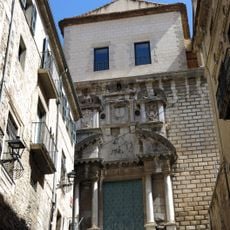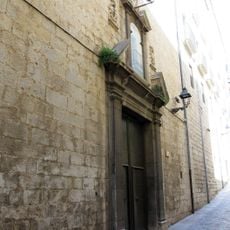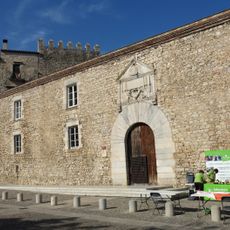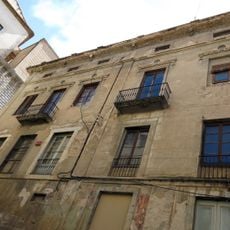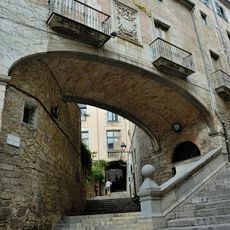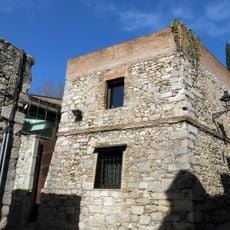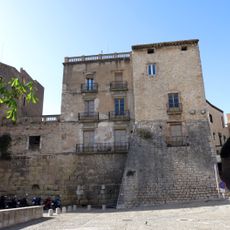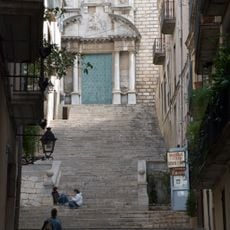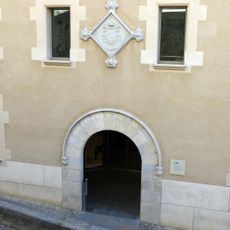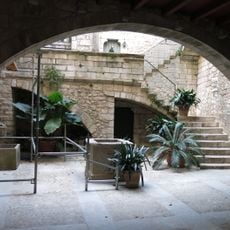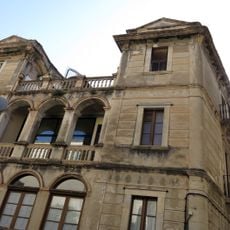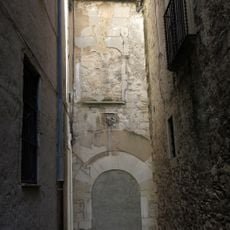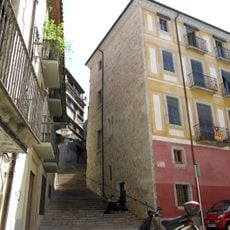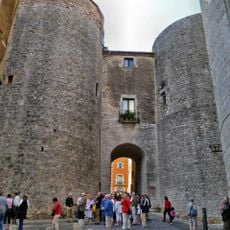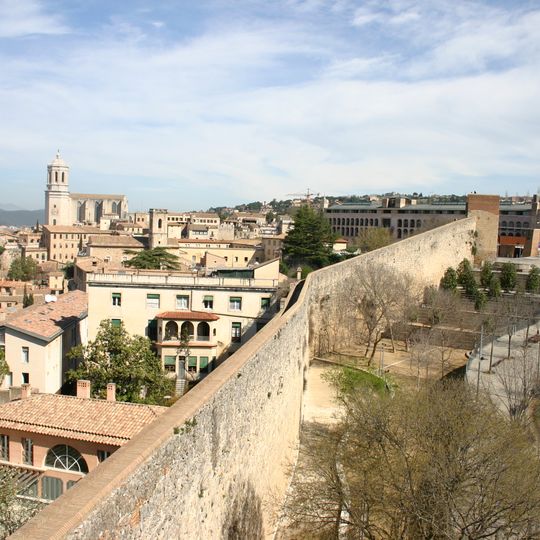
Muralles de Girona, Medieval sandstone fortification in Girona, Spain.
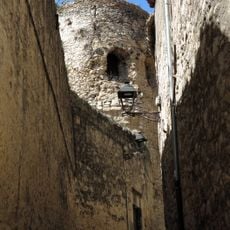
The Muralles de Girona are the defensive complex of walls, towers, gates and bastions around the old town. The Roman founding wall of the 1st century BC followed a triangular course of about 6 hectares, using sandstone from Domeny; the cardo maximus is today's Carrer de la Força. The Carolingian period added truncated-cone towers alongside Roman square ones, and the 14th-century medieval wall enclosed the new quarters.
The first walled enclosure dates from 80–70 BC, when the Roman general Gnaeus Pompeius Magnus founded Gerunda; it followed the terrain in a triangle of about 6 hectares, built with sandstone from Domeny. In the 9th–10th centuries, Carolingian reforms added truncated-cone towers and doubled the wall's inner width. In the 14th century, under King Peter the Ceremonious, the existing wall was consolidated as the Força Vella and new walls were begun to enclose the growing quarters outside it.
The walls shape how visitors experience the old town and show how medieval communities defended themselves. Walking along the path, you notice how the architecture reflects the city's need to protect its residents across centuries.
You can enter the walls at multiple locations and complete the full circuit in around two hours of walking. The path is mostly level and straightforward, making it accessible for most visitors.
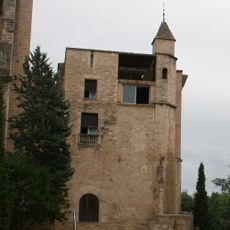
Torre Gironella, a square-plan bastion, formed the highest point of the Roman wall, not its eastern section. It was the only tower in the entire circuit, built to defend a spot lower than the surrounding mountains. Its exact link to the wall remains unknown.
The community of curious travelers
AroundUs brings together thousands of curated places, local tips, and hidden gems, enriched daily by 94,143 contributors worldwide.