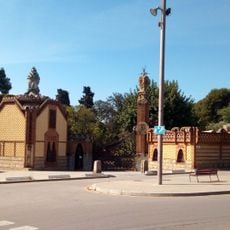
Sarrià Capuchins, Capuchin convent in Sarrià-Sant Gervasi, Barcelona, Spain
Sarrià Capuchins is a convent complex in the Sarrià-Sant Gervasi district of Barcelona, built from 1887 on land donated by the Ponsich family. It is now the seat of the Missional Ethnographic Museum, the Hispanic-Capuchin Library and the Provincial Archive of the Capuchins of Catalonia and the Balearic Islands. A cedar over 130 years old stands at the entrance.
Founded in 1578 at the request of Barcelona's city council, this was the first Capuchin settlement on the Iberian Peninsula. This establishment marked the beginning of the order's long presence across Spain.
The convent houses an ethnographic museum displaying objects from the Andes and Amazon, reflecting the friars' missionary work across those regions. Visitors can explore these collections and understand the community's long-standing connection to indigenous cultures.
The convent stands at the end of Carrer dels Caputxins in Sarrià, a few minutes' walk from the FGC Sarrià station. The museum, the Hispanic-Capuchin Library and the provincial archive occupy the same building, so visits depend on the friars' community life. The entrance is marked by the cedar at the door, more than 130 years old.
In March 1966 the convent hosted the constituent assembly of the Sindicat Democràtic d'Estudiants de la Universitat de Barcelona. Police surrounded the building for three days, and the episode, known as the Caputxinada, drew support from outside Spain. The same complex now holds the Museu Etnogràfic Missional and the Biblioteca Hispanocaputxina.
The community of curious travelers
AroundUs brings together thousands of curated places, local tips, and hidden gems, enriched daily by 93,447 contributors worldwide.