Mare de Déu del Tura, Baroque church in Olot, Spain
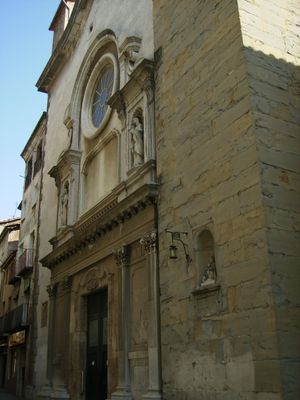
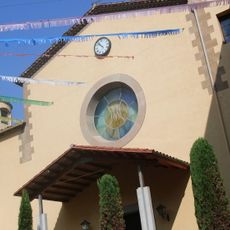
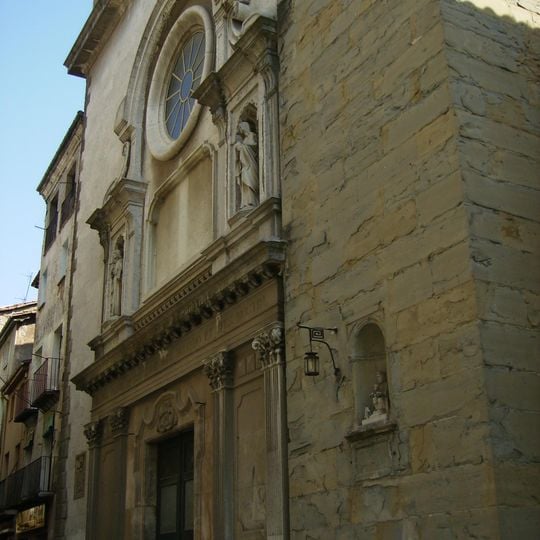
Mare de Déu del Tura is a baroque church in Olot featuring a symmetrical facade, Corinthian pilasters, and decorative niches with religious statuary. The central rose window and ornamental details reflect the baroque style of the 17th and 18th centuries.
The first documented mention of Olot is a 872 charter by Charles the Bald granting the ancient church of Sancta Maria Olotis. Earthquakes destroyed the Romanesque church in 1427 and 1428; a 1427 privilege of Alfonso the Magnanimous allowed rebuilding. The 16th-century enlargement was entrusted to stonemason Enric Julià, and between 1790 and 1814 Joan Carles Panyó transformed the interior. The present facade was built in 1930 by Josep Danés.
The Romanesque carving of the Virgin is made of walnut and white poplar, probably from the 12th century, and bears the four red and yellow stripes of the old Counts of Barcelona painted on the base of its throne. The name Tura comes from an old Catalan word for bull, after the legend of an ox that scratched the ground until the image was found. Since the 16th century Tura has been a common woman's name in Olot, and the Virgin is the town's patroness, celebrated on 8 September with the Festes del Tura.
The church is located in central Olot, bordered by Tura Street, Valls Nous Street, and Proa Street, making it easy to find. It opens daily for services, so visitors should plan their visit outside of worship times for better access.
The name 'Tura' comes from an old Catalan word meaning 'bull,' rooted in a local legend where a bull discovered the Virgin's image by scratching the ground. This unusual origin story sets this place apart in how people know and call it today.
The community of curious travelers
AroundUs brings together thousands of curated places, local tips, and hidden gems, enriched daily by 93,501 contributors worldwide.