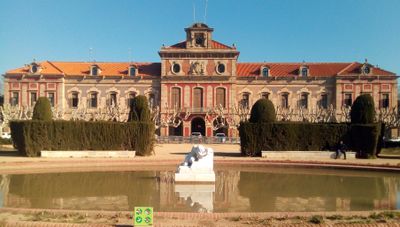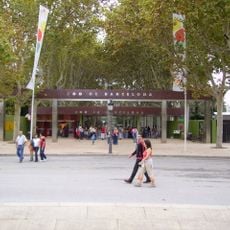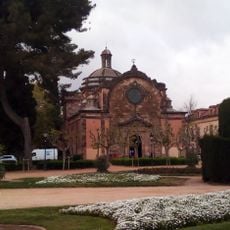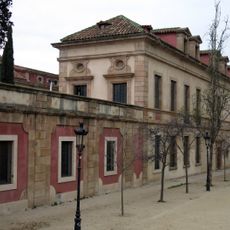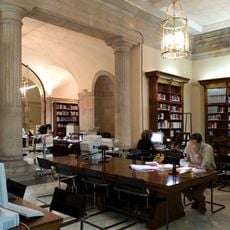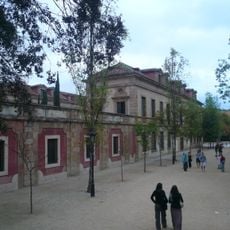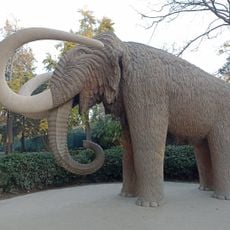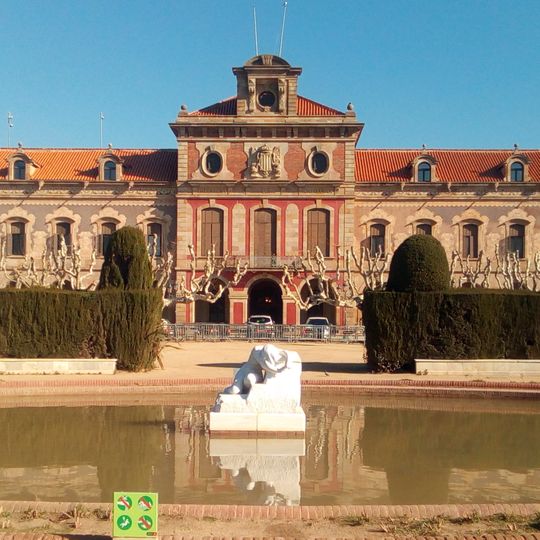
Palace of the Parliament of Catalonia, Parliament building in Ciutadella Park, Barcelona, Spain.
The Palace of the Parliament of Catalonia is a cross-shaped arsenal built between 1717 and 1727 to Jorge Próspero de Verboom's design, with two floors, an attic and four courtyards between the arms of the cross. It is built of Montjuïc stone and red tile. Pere Falqués raised the central bay, added balconies and two side wings, and placed the stone Bourbon escutcheon from the Ciutadella's Porta del Socors on the facade.
Engineer Jorge Próspero de Verboom designed this structure in 1727 as a military arsenal for the fortress. After decades of transformation, it became the seat of the Catalan Parliament in 1932.
The 28 marble busts in circular niches along the façades honour Catalan artists and art historians, from Lluís Dalmau to Mariano Fortuny, and were installed between 1909 and 1911. The stone coat of arms on the attic, moved from the Ciutadella's Porta del Socors, has been swapped between the Bourbon arms and the four bars of Catalonia with each political change; the current version dates from 2012.
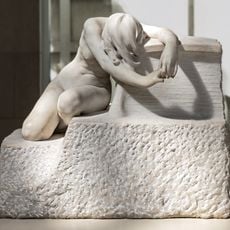
The palace stands at the end of the former parade ground, now the garden with Llimona's pond sculpture, facing the park's main paths. The building is a working parliament: access is by guided visit only, arranged in advance, and sessions may close rooms. The façade faces the pond, so the clock tower and the stone escutcheon are seen from the garden side.
The stone coat of arms on the attic level comes from the Porta del Socors, a demolished gate of the Ciutadella. It has been swapped three times: the Bourbon arms were replaced by the four bars of Catalonia in 1932, restored under Franco, and changed back in 1977. In 2012 the Generalitat's arms were added above it.
The community of curious travelers
AroundUs brings together thousands of curated places, local tips, and hidden gems, enriched daily by 93,461 contributors worldwide.