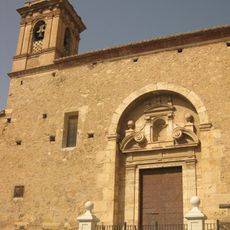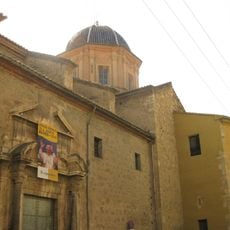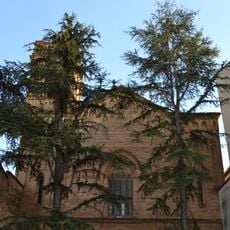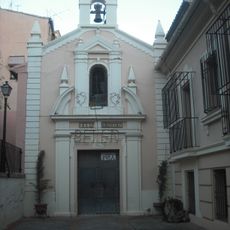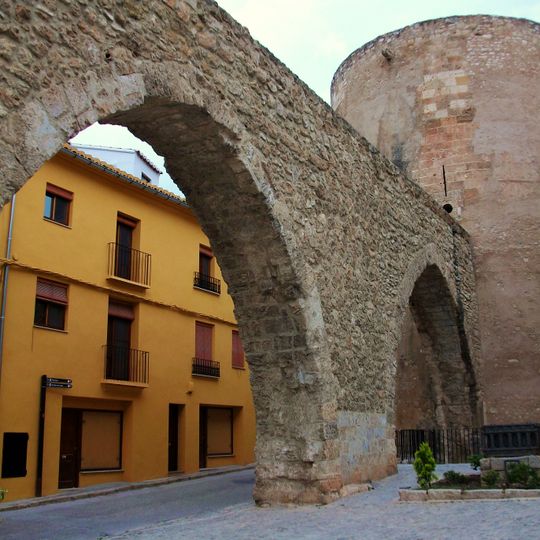
Segorbe Aqueduct, Castle and Walls, Medieval defensive complex in Segorbe, Spain
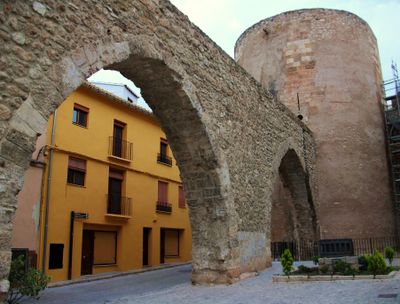
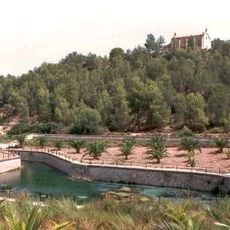
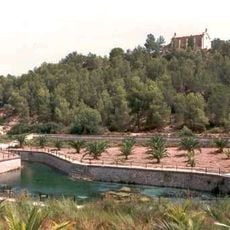
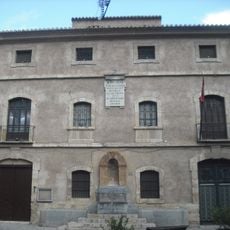
The Segorbe Aqueduct is a medieval water-carrying structure with pointed arches that spans across the landscape and connects to fortified walls and a castle positioned on a hill. The complex integrates water supply, defensive, and residential components into a single unified system.
Some authors place the castle's foundations in an Iberian settlement later rebuilt in Roman times; a Roman fortified nucleus is presumed on the same hill, though Visigothic occupation cannot be documented. Written records attest a Muslim alcázar and its governor. After converting to Christianity, Zayd Abu Zayd took Segorbe in 1245 under his 1229 vassalage pact with James I. The fortified area peaked in the 15th century, declined when the dukes of Segorbe moved their residence into the town, and was refortified during the Carlist wars.
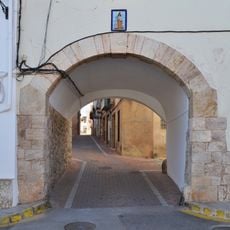
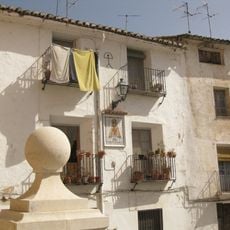
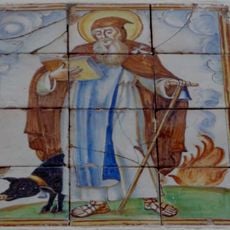
The Botxí Tower takes its name from the executioner who once lived there, and the Verònica Gate is named after an image of the Holy Face kept inside. The castle hill is now a municipal park used for tourism, while the surviving wall stretches run between Carrer del Argén and the start of Passeig de Sopeña.
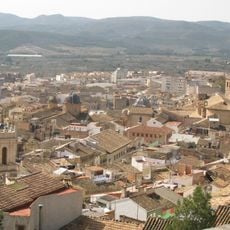
The complex sits in hilly terrain and is reachable through marked paths that connect different sections. Daytime visits work best for seeing the structure and surroundings clearly.
The surviving aqueduct consists of three complete pointed arches of ashlar masonry, plus the remains of four more, standing inside the town centre rather than in open country. The castle above is ruinous partly because its stone was reused for the Hospital and the Casa de la Misericordia.
The community of curious travelers
AroundUs brings together thousands of curated places, local tips, and hidden gems, enriched daily by 95,513 contributors worldwide.