Palacio Lezama-Leguizamón, Early 20th-century palace in Neguri district, Getxo, Spain.
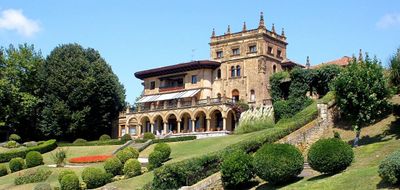
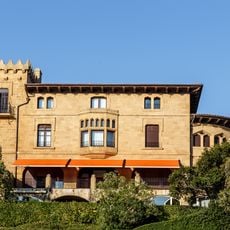
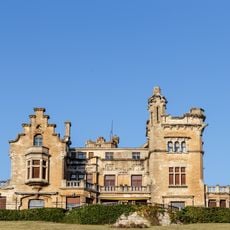
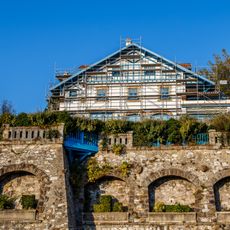
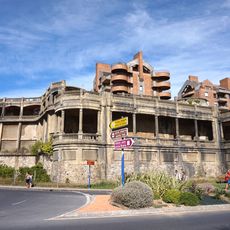
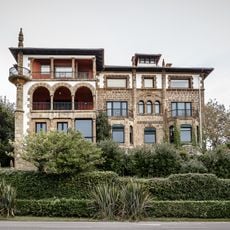
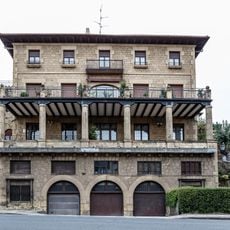
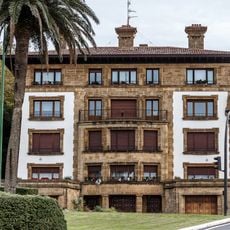
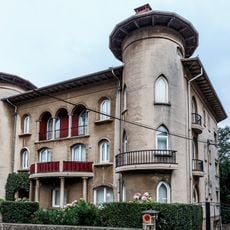
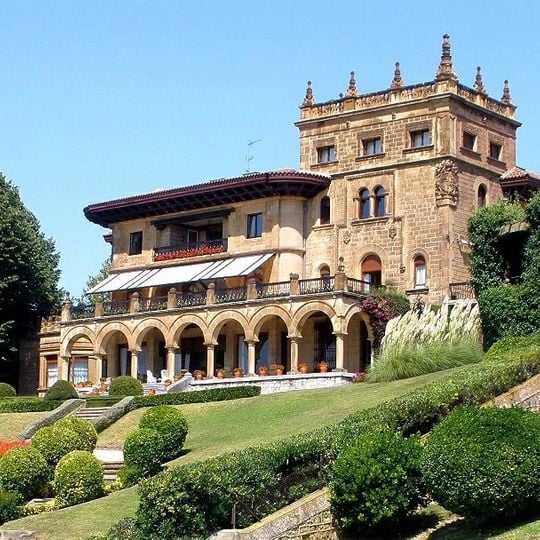
Palacio Lezama-Leguizamón is a palace on the Arriluce promontory in Neguri, Getxo, built in sandstone ashlar with a U-shaped plan. Its sea-facing facade has three parts: a central plateresque tower inspired by the Palacio de Monterrey in Salamanca, a gallery of seven round arches with bulging columns, and the former library wing. The tower has a cresting of pinnacles and a coat of arms at its right corner.
The palace was commissioned by the businessman, traditionalist politician and bibliophile Luis Lezama-Leguizamón Sagarminaga and his wife Felisa Zuazola, and built in 1903 to plans by José María Basterra. From 1919 Manuel María Smith remodelled it from top to bottom, turning the original classicist blocks into one of his most personal works. It has remained a residence linked to the same family.
The tower imitates the 16th-century tower of the Palacio de Monterrey in Salamanca, with a corner coat of arms, stepped alfiz, twin arched opening and pinnacled cresting. The seven round arches of the gallery rest on bulging columns with moulded archivolts. The palace was built for Luis Lezama-Leguizamón Sagarminaga, a businessman, traditionalist politician and bibliophile, and his wife Felisa Zuazola.
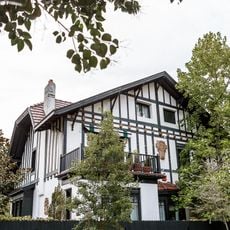
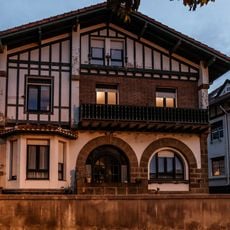
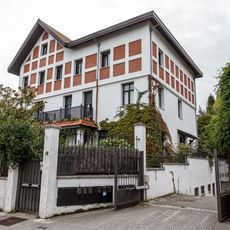
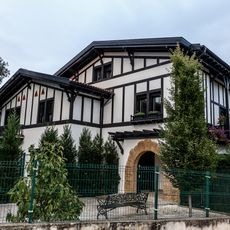
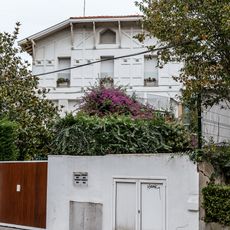
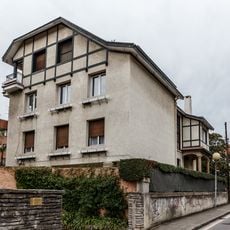
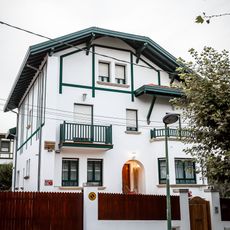
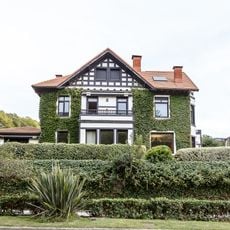
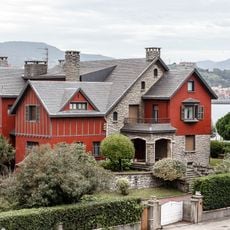
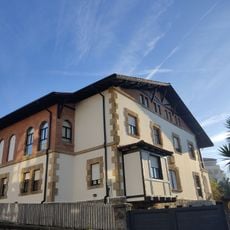
The palace stands on the Arriluce promontory, on Atxekolandeta street in Neguri, with its main facade facing Abra Bay. It is a private residence, so visitors see only the exterior and the garden enclosure from the surrounding streets. The grounds are fenced, and the entrance gate and porter's lodge are visible from the road.
The residence once contained a private library that ranked among the largest on the Iberian Peninsula before fire destroyed it in 1933. This loss stands as a reminder of both the wealth and fragility of such cultural collections from that era.
The community of curious travelers
AroundUs brings together thousands of curated places, local tips, and hidden gems, enriched daily by 93,762 contributors worldwide.