Muralla urbana de Llerena
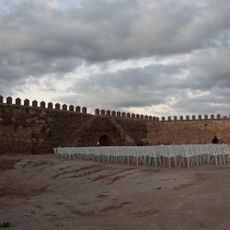
The Muralla urbana de Llerena is a medieval defensive wall that once encircled the city in Badajoz province. Built from stone with an oval shape, it originally featured multiple gates and towers, of which only fragments remain today including the Puerta de Montemolín and Puerta de la Reina, both showing architectural details from later centuries.
The city was founded by Muslims in the 11th century as Ellerina and became strategically contested territory. Christian forces under Pelay Pérez Correa captured it in 1243, after which it became the headquarters of the Order of Santiago in Extremadura and was declared a city by King Felipe IV in 1640.
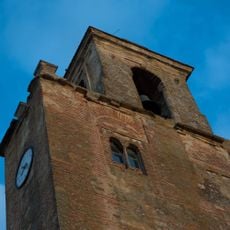
The name Llerena comes from the Arabic settlement Ellerina, recorded by the 11th century around the Fuente Pellejera. The Puerta de Montemolín, the most notable surviving gate, has an upper storey resembling an open Renaissance chapel, with a floor slab bearing an inscription dated 1577.
The wall circuit is oval and its gates open onto the main streets, so follow those streets to find surviving stretches of masonry and crenellation. The Puerta de la Reina keeps its full defensive layout, while of the Puerta de Villagarcía only the gate itself stands, without the adjoining wall sections. At the Puerta de Montemolín, look for the inscription slab dated 1577 set at floor level of its chapel-like upper body.
A local legend recounts that during the 1243 battle, the Virgin Mary appeared to Christian fighters holding a pomegranate, giving them strength to prevail. This vision later inspired the construction of a church dedicated to the Virgin of the Pomegranate built over the site of a former mosque.
The community of curious travelers
AroundUs brings together thousands of curated places, local tips, and hidden gems, enriched daily by 95,300 contributors worldwide.