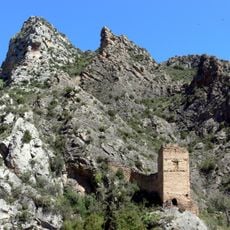
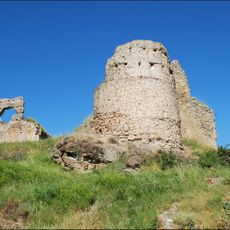
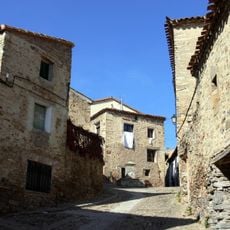
Castillo de Yanguas, Medieval castle in Yanguas, Spain.
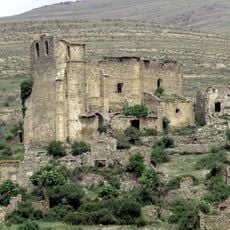
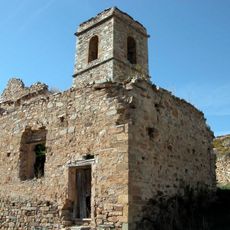
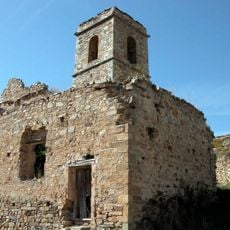
Castillo de Yanguas is a 14th-century fortress built in rammed earth (tapial) using Islamic construction techniques. Its nearly square inner enclosure is flanked by four square towers topped with battlements, one of which, the Torre del Homenaje, has a wider base. Three sides of the outer rammed-earth wall and its access gate still stand, and two coats of arms remain visible in a wall opening.
The fortress was built in the 14th century by descendants of Navarrese kings and served as a symbol of regional authority for centuries. It sustained major damage when Napoleon's forces passed through Yanguas during their military campaign.
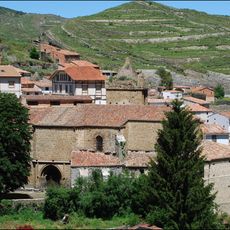
The castle's name comes from the village of Yanguas, of which it was the defensive stronghold; its lords, the Ramírez de Arellano, were señores de Yanguas from 1366. Two coats of arms can still be seen set into a gap in the tapial walls, and the site has been the object of consolidation work since 2001.
The castle stands on a spur flanked by two streams to the north and south and the Cidacos river to the east, so the approach is on foot. Consolidation work on the ruins has been under way since 2001, and some areas may be fenced off. A tower was to be fitted out to receive visitors, but the plan was dropped when paving and column remains appeared in the courtyard.
Excavations during the consolidation works uncovered the cobbled paving and remains of the columns that once surrounded the inner courtyard, the patio de armas. The funds set aside for a visitor tower were redirected to studying and excavating these finds, so that tower was never fitted out.
The community of curious travelers
AroundUs brings together thousands of curated places, local tips, and hidden gems, enriched daily by 94,839 contributors worldwide.