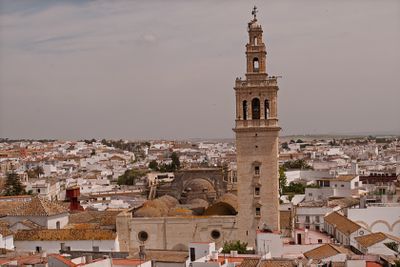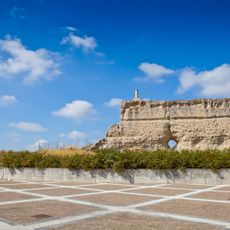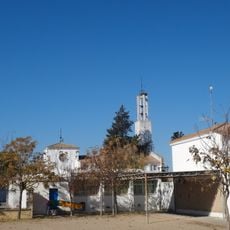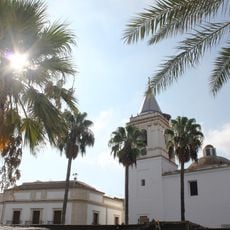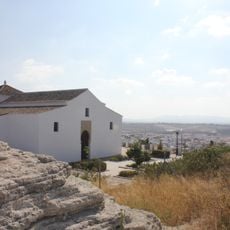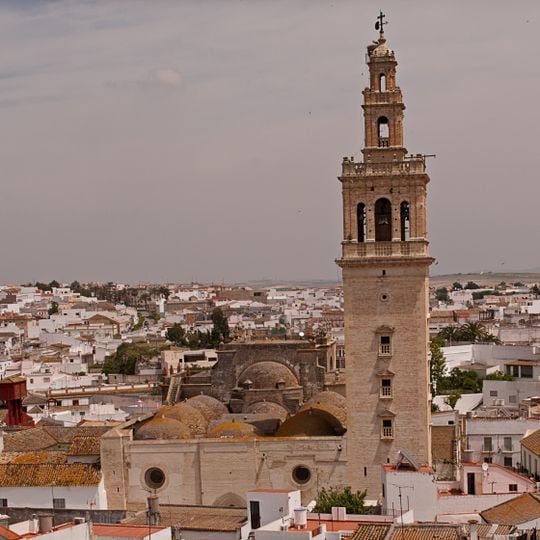
Iglesia de Santa María de la Oliva, Gothic church in Lebrija, Spain.
Iglesia de Santa Maria de la Oliva is a Gothic church in Lebrija with three naves separated by pillars featuring pointed horseshoe arches. The building preserves four sections from its original medieval construction and displays complex architectural development across several centuries.
Built in the second half of the 13th century under Alfonso X, the church was expanded from 1475 to the end of the 16th century, when Francisco Rodríguez directed works until 1503 and Hernán Ruiz II designed the sacristy in 1568. The Lisbon earthquake of 1755 destroyed the bell tower, rebuilt between 1756 and 1778. The church was declared a monument in 1931.
The retablo of the high altar was made by Alonso Cano between 1629 and 1631, with a colossal architectural order crowned by a Crucifix in the attic. The Virgen de la Oliva, carved by Cano, is held by many to be his finest sculpture; the paintings are by Pablo Legot. The sagrario and the niche of the Virgin are by Juan Santa María Navarro.
The church is located at Plaza del Rector Merina and maintains regular visiting hours, with guided tours available for groups interested in learning more. It's worth checking ahead to see if special times or holidays might affect access to the interior.
The tower replaced an earlier bell tower destroyed by the 1755 Lisbon earthquake; it was raised between 1756 and 1778, with a stone first body and brick above. Its silhouette earned it the local nickname "la Giraldilla", after Seville's Giralda. The baptismal font inside came from Flanders.
The community of curious travelers
AroundUs brings together thousands of curated places, local tips, and hidden gems, enriched daily by 95,526 contributors worldwide.