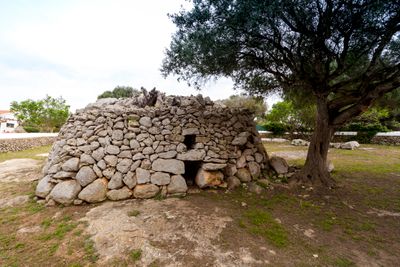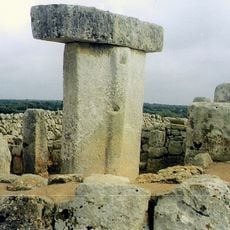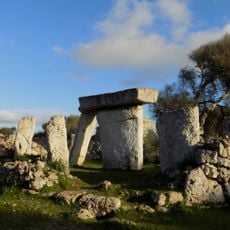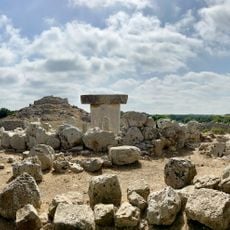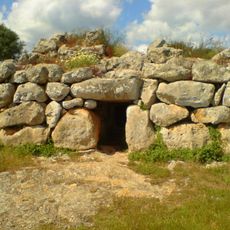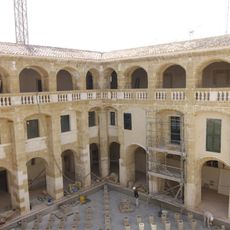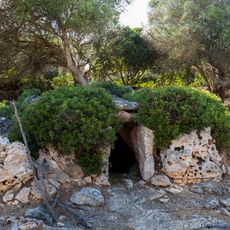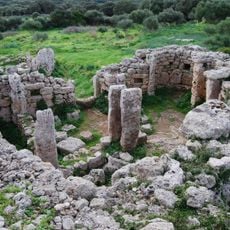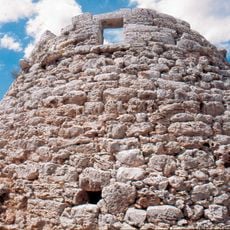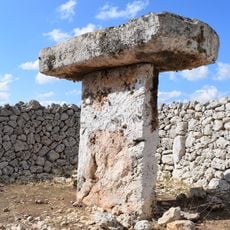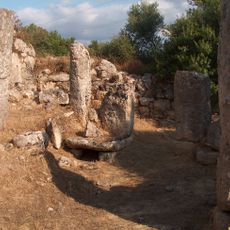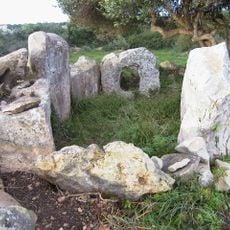
Eastern Biniac naveta, Prehistoric funeral monument in Alaior, Spain.
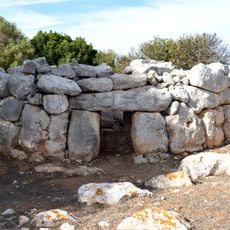
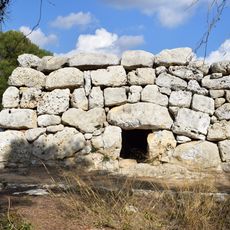
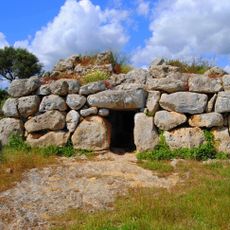
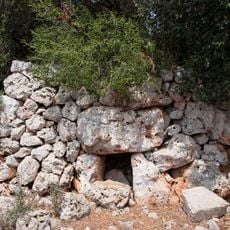
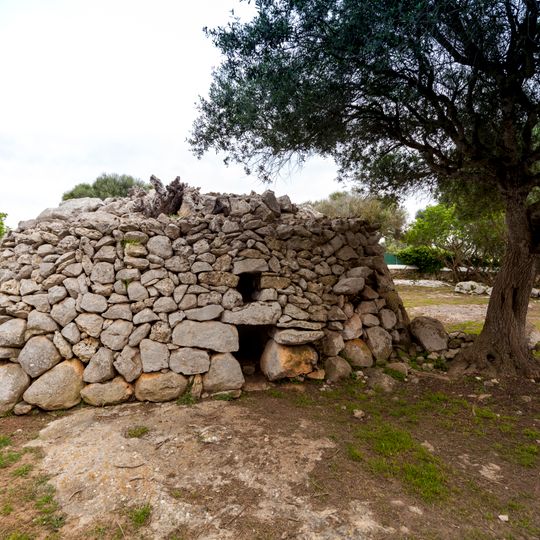
Eastern Biniac naveta is a prehistoric burial structure with a circular plan connected by a long corridor to an oval chamber, constructed from large horizontal stones stacked in cyclopean style. The design reflects the building methods typical of Bronze Age communities who shaped massive blocks without mortar.
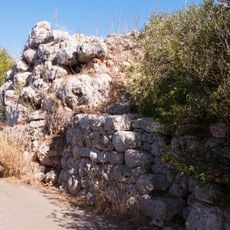
Built between 1500 and 1000 BCE during the Bronze Age, it served the Talaiotic culture as a collective burial site for families. Medieval people later added a dry stone wall to the southern side, partially obscuring the ancient construction.
The chamber served as a place where families buried their deceased together with objects reflecting their beliefs about the afterlife. This practice reveals how important communal ritual and shared burial customs were to these ancient people.
Access is from kilometer 8.1 of the Mahon-Ciudadela road, where you turn left toward an area called Argentina. The site sits in open countryside, so wear sun protection and bring water, especially during warmer months.
The southern side hides part of the original prehistoric construction beneath a medieval dry stone wall, making it a layered record of different time periods. This unexpected blend shows how later generations integrated older structures into their own building practices.
The community of curious travelers
AroundUs brings together thousands of curated places, local tips, and hidden gems, enriched daily by 91,253 contributors worldwide.