Papa Luna palace, Medieval palace in Illueca, Spain
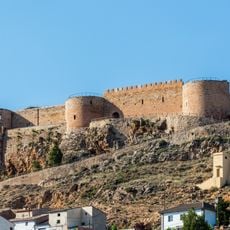
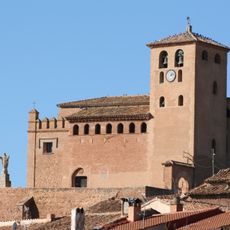
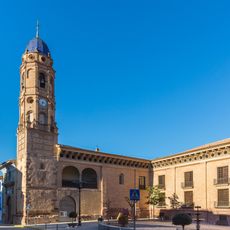
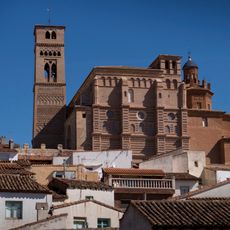
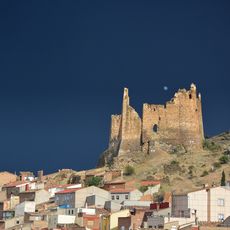
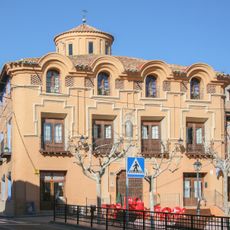
The Palacio de los Luna, also called Castillo Palacio del Papa Luna, is a Renaissance building erected over a late-medieval fortress between the 14th and 16th centuries in Illueca. It is a long rectangular structure of masonry and brick with three levels, four cubic corner towers and a main facade framed by two small semicircular towers. Inside, a 17th-century monumental staircase rises where the medieval courtyard stood, leading to a gallery of round arches on columns beneath a dome on pendentives with a lantern.
The palace originated in the 14th century, when it became connected to Benedict XIII, who was born here and later became Pope. His role during the period of church division shaped the building's significance in European history.
The palace is also called Castillo Palacio del Papa Luna, after Benedict XIII, born in a private chamber here in spring 1328. The Golden Room, the 14th-century hall at the heart of the complex, keeps a Gothic-Mudéjar frieze of polychrome pierced plasterwork running around its walls, alongside the Luna family's heraldic shields and plant motifs.
The palace stands in the centre of Illueca, in the province of Zaragoza. Visitors enter through the main doorway, framed by double pilasters with Tuscan capitals and a split pediment, and reach the upper floors by the 17th-century staircase built where the medieval courtyard once stood. The building is a listed monument, so visits are made on foot through the town's streets.
The 17th-century monumental staircase stands where the open medieval courtyard once was, rising to a gallery of round arches on simple columns and capped by a dome on pendentives with a lantern. The German text wrongly described the building as having four corner towers added in that century.
The community of curious travelers
AroundUs brings together thousands of curated places, local tips, and hidden gems, enriched daily by 93,925 contributors worldwide.