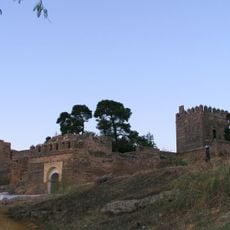
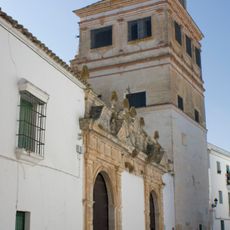
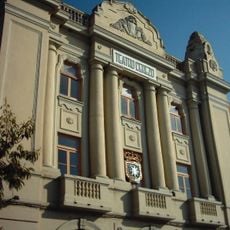
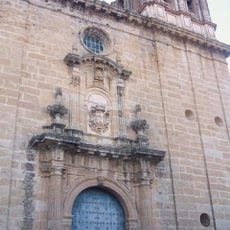
Alcázar y Puerta de Córdoba, Roman triumphal gate in Carmona, Spain
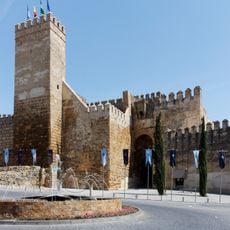
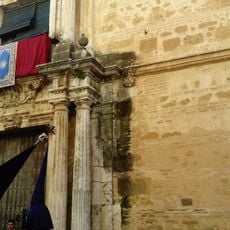
The Puerta de Córdoba is a monumental gate in the eastern wall of Carmona, at the end of the Roman cardo maximus. It preserves two relief pilasters with Attic bases, part of one semi-octagonal tower, a staircase and a vault from the 1st century AD. The present facade, with a single semicircular arch flanked by paired columns and a triangular pediment, results from José de Echamorro's remodelling of 1796–1800.
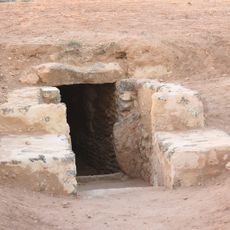
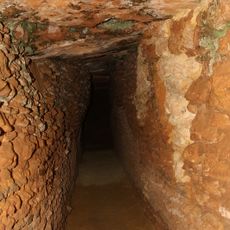
The gate preserves wall sections, two relief pilasters, part of two semi-octagonal towers, a staircase and a vault from its 1st-century AD Roman construction, dated by architectural parallels to the reigns of Augustus or Tiberius. It stood at the end of the cardo maximus, on the Corduba-Hispalis stretch of the Via Augusta. Pedro I built the Alcázar de la Reina beside it in the 14th century, demolished under the Catholic Monarchs. The 1504 earthquake brought down a tower, the central arches collapsed in 1603, and José de Echamorro remodelled the facade between 1796 and 1800.
The gate's name comes from the road to Cordoba, the Corduba-Hispalis stretch of the Via Augusta that passed through its arch. The 1688 rebuilding under Charles II is recorded in an inscription inside the arch, and since 2000 the passage has led into an interpretation centre on the gate itself.
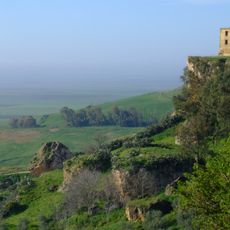
The site is walkable from central Carmona and offers views across the surrounding countryside to the east. A visitor center with interpretive materials is located on-site, though checking with the local tourism office beforehand is advisable.
The gate was never a fortress: its monumental size and weak defensive capacity made it a triumphal arch honouring Roman power. In Roman times it stood over 30 metres wide with three arches, two for pedestrians and one for carts, and its upper storey rose high enough to be seen from kilometres away across the vega.
The community of curious travelers
AroundUs brings together thousands of curated places, local tips, and hidden gems, enriched daily by 94,851 contributors worldwide.