Carteia, Archaeological site in San Roque, Spain
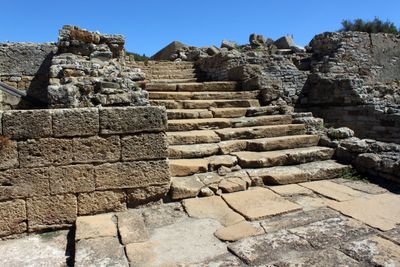
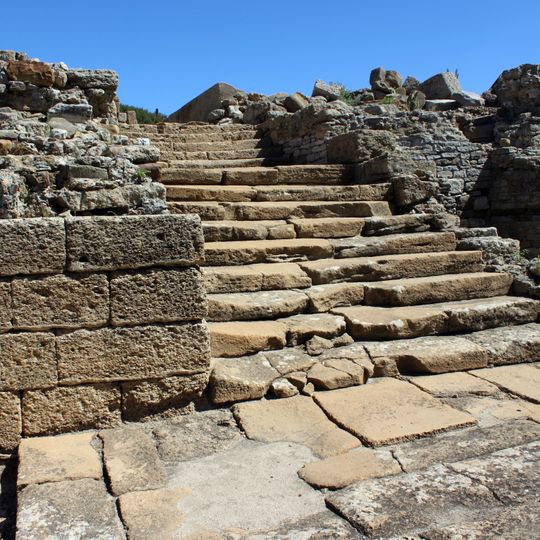
Carteia is an archaeological site in San Roque, Spain, featuring a wide stone stairway that leads up to a flat-topped ruin. The steps are made of long, rectangular blocks of pale tan and beige stone, worn and uneven, with a section of wall built from large, rough-cut stones to the left.
Carteia was founded by the Phoenicians around 940 BC and later became a Roman colony in 171 BC, the first Latin colony outside Italy. It was abandoned by the 7th century after Visigothic and Muslim occupations.
The name Carteia comes from the Phoenician word for city, and the site is part of the Network of Cultural Spaces of Andalusia. Visitors can see the remains of a Roman forum, theatre, and baths, which show how the city was used in ancient times.
The site is outdoors and the ground is uneven, so wear comfortable shoes and watch your step on the worn stones. There is little shade, so bring water and sun protection, especially in summer.
In 1717, a young British officer named John Conduitt rediscovered the site and presented his findings to the Royal Society, where Isaac Newton chaired the session. Conduitt later married Newton's niece, Catherine Barton.
The community of curious travelers
AroundUs brings together thousands of curated places, local tips, and hidden gems, enriched daily by 94,468 contributors worldwide.