Arab World Institute

Log in to your account

AroundUs is a community-driven map of interesting places, built by curious explorers like you. It grows with every review, story, and photo you share.
Connect to save your favorite spots, contribute locations, and create personalized routes.
By continuing, you accept our Terms and Conditions and our Privacy Policy
Add to collection
Map
Suggest a change
Share

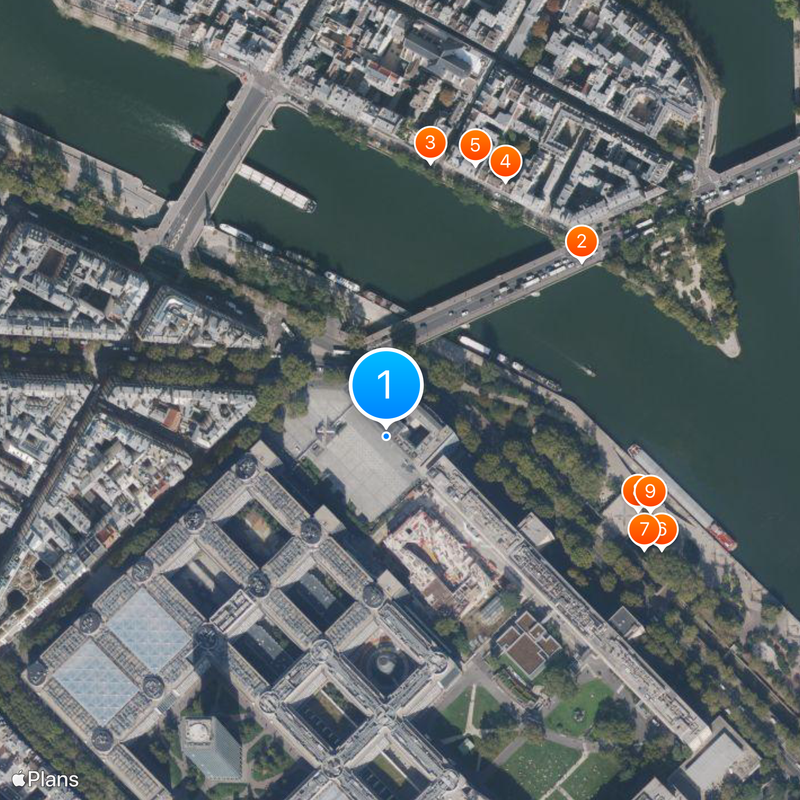
Arab World Institute, Cultural center and museum in 5th arrondissement, France.

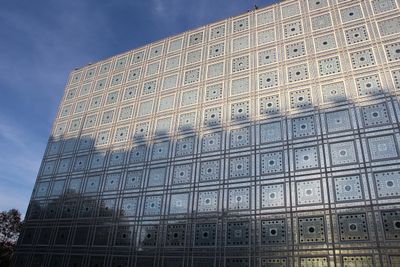
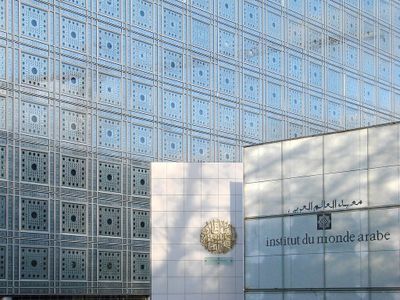
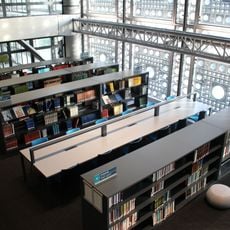
The Arab World Institute building features geometric patterns with motorized diaphragms on its southern facade that control natural light throughout the structure.

France partnered with eighteen Arab nations to establish this institution in 1980, with construction completed in 1987 under President François Mitterrand's administration.

The institute maintains extensive collections of Islamic art and hosts exhibitions, performances, workshops, and educational programs focused on Arab civilization and contemporary expressions.

The institute welcomes visitors from Tuesday through Friday between 10:00 AM and 6:00 PM, while weekend hours extend until 7:00 PM, with access via metro lines 7 and 10.

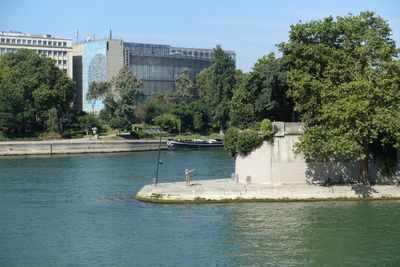
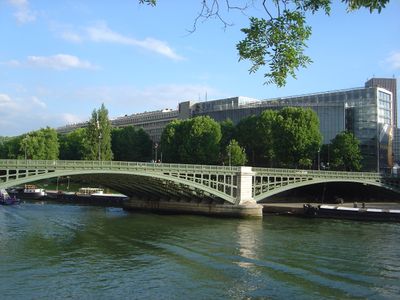
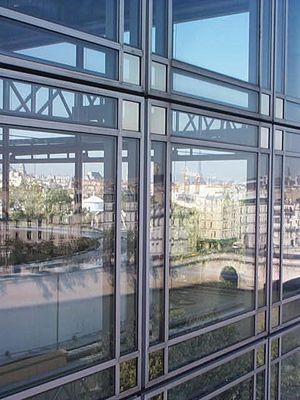
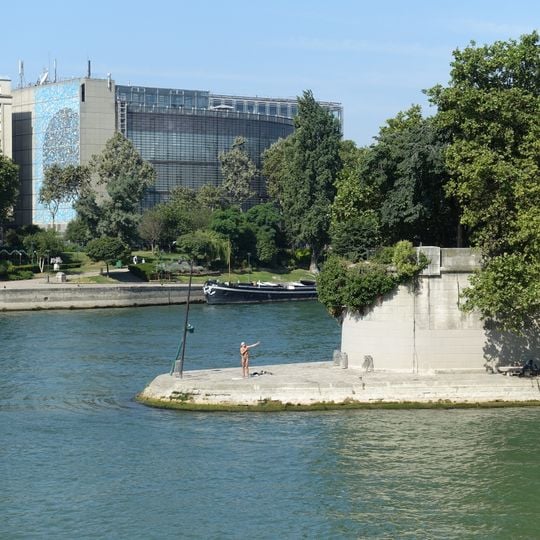
The building's north facade incorporates mirrored glass panels that reflect the Seine River and surrounding Parisian landscape, creating a visual dialogue between European and Arab architectural elements.

Location: 5th arrondissement of Paris

Inception: November 30, 1987

Architects: Jean Nouvel, Architecture-Studio

Accessibility: Wheelchair accessible

Fee: Yes

Opening Hours: Monday off; Tuesday-Friday 10:00-18:00; Saturday-Sunday,Holidays 10:00-19:00

Phone: +33140513838

Website: http://imarabe.org

GPS coordinates: 48.84890,2.35704

Latest update: November 22, 2025 17:42

Unique architectural marvels in Paris

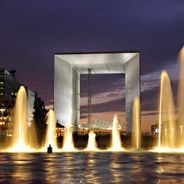
Paris has reshaped its architectural landscape over recent decades by constructing distinctly contemporary buildings. La Défense's Grande Arche extends the city's historic axis, while Frank Gehry's Louis Vuitton Foundation unfurls its glass sails in Bois de Boulogne. The François Mitterrand Library rises with four towers shaped like open books along the Seine, symbolizing a confident embrace of modernity. However, Paris architecture is not limited to recent constructions. The city has reinvented old structures: La Samaritaine, a department store in Art Nouveau and Art Deco styles, was restored to its former glory after a lengthy renovation. The former Bercy wine warehouses have become a lively shopping district, the Viaduc des Arts hosts artisan workshops beneath its 19th-century arches, and the Centquatre turned a municipal funeral home into a cultural center. These renovations demonstrate how Paris combines heritage preservation with adaptation to contemporary functions.

Jean Nouvel Architecture: Contemporary Structures, Museums, and Skyscrapers

Jean Nouvel is among the most recognized French architects of our time. His work spans five continents, including museums, office towers, concert halls, and residential complexes. Each project demonstrates his ability to combine technical innovation with respect for the local context, whether through material choices, light manipulation, or integration into the existing urban fabric. Among his major works, the Louvre Abu Dhabi features a perforated dome that creates a shower of light, while the Glòries Tower in Barcelona rises with its cylindrical shape and colorful facades. In Paris, the Arab World Institute has a façade equipped with mechanical diaphragms inspired by Islamic art, and the Philharmonie updates concert hall architecture with its silver volumes. Beyond Europe and the Middle East, his projects extend to Sydney with One Central Park and its hanging gardens, or Fort Worth with a museum surrounded by water basins. These buildings provide the opportunity to explore architecture that interacts with its environment and challenges conventions. Each visit allows appreciation of how architectural creativity can transform our relationship with urban and cultural spaces.

Historical sites in Paris Quartier Latin

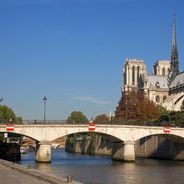
The Latin Quarter is one of the oldest parts of Paris and preserves traces from over two thousand years of history. Roman remains like the Arènes de Lutèce recall the ancient settlement of Lutetia, while medieval churches such as Saint-Étienne-du-Mont and Saint-Julien-le-Pauvre document the religious past. The Sorbonne and the Collège de France have made the district a center of learning since the Middle Ages, and institutions like the Bibliothèque Sainte-Geneviève continue this academic tradition. The Musée de l'Histoire de la Médecine traces the development of medicine, the Musée Curie honors the scientific discoveries of Marie and Pierre Curie, and the Musée des Arts du Moyen Âge displays medieval art within the ruins of Roman baths. Narrow streets lead to squares like Place de la Contrescarpe and Place de l'Estrapade, where locals gather in cafés and markets. The Marché de la Rue Mouffetard is one of the city's oldest street markets and offers fresh produce daily. Literary and artistic traces appear at the Maison de Serge Gainsbourg, the historic jazz cellar Le Caveau de la Huchette, and cafés like Le Procope, which has welcomed writers and thinkers since the 17th century. The Jardin des Plantes combines botanical collections with the Musée de Minéralogie, while the Square René-Viviani provides a quiet view of Notre-Dame with its ancient tree. The Grande Mosquée de Paris and the Institut du Monde Arabe add North African and Arab perspectives to the cultural offerings.

Reviews

Real people, real opinions — but not verified.

Visited this place? Tap the stars to rate it and share your experience / photos with the community! Try now! You can cancel it anytime.

stephren
@stephren

Apr 3, 2025 10:29

Wonderful museum that highlights the Arab world through very beautiful temporary exhibitions. The building itself is worth a visit, just steps away from the Seine.

« Arab World Institute: Cultural center and museum in 5th arrondissement, France » is provided by Around Us (aroundus.com). Images and texts are derived from Wikimedia project under a Creative Commons license. You are allowed to copy, distribute, and modify copies of this page, under the conditions set by the license, as long as this note is clearly visible.

Discover hidden gems everywhere you go!

From secret cafés to breathtaking viewpoints, skip the crowded tourist spots and find places that match your style. Our app makes it easy with voice search, smart filtering, route optimization, and insider tips from travelers worldwide. Download now for the complete mobile experience.

Around Us App Screenshot

A unique approach to discovering new places

Le Figaro

All the places worth exploring

France Info

A tailor-made excursion in just a few clicks

20 Minutes