Château de Hunebourg, Medieval castle near Neuwiller-lès-Saverne, France
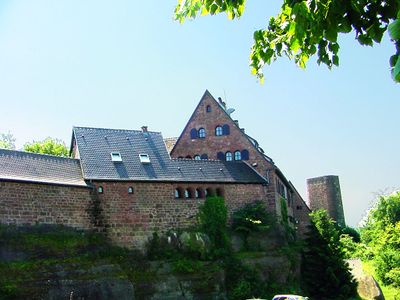
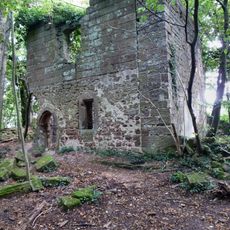
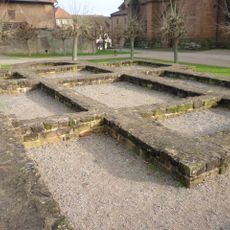
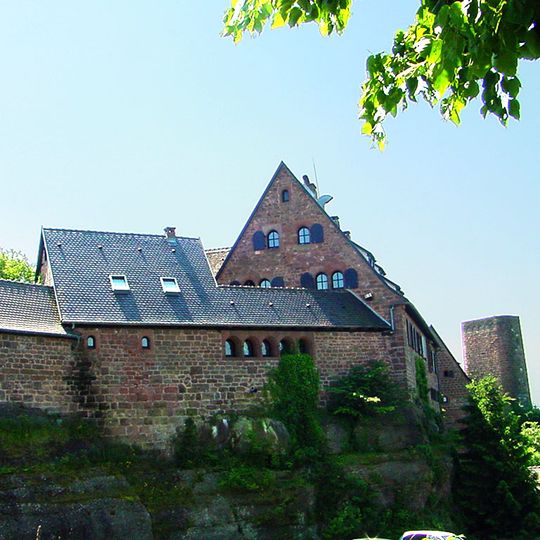
Château de Hunebourg is a ruined castle in Alsace, France, set on a sandstone rock above the Zinsel du Nord valley near the village of Dossenheim-sur-Zinsel. The site spreads across several levels that follow the natural shape of the rock, with walls, towers, and building remains visible at different heights.
The Hunebourg family first appeared in records around the middle of the 12th century, but the castle itself was first mentioned in writing in 1288, when it was already in the hands of the Lichtenberg lords. Over the following centuries it changed ownership several times before falling into ruin.
The name "Hunebourg" comes from the Alsatian word for giant, a reference to the massive sandstone blocks that make up the walls, which locals thought only giants could have built. Visitors walking along the base of the walls can still see how the natural rock was shaped into the foundations, making the two almost indistinguishable.
The castle sits along a well-marked section of the Chemin des châteaux forts d'Alsace hiking trail, which runs between La Petite Pierre and Ernolsheim-lès-Saverne and makes it easy to combine with other nearby ruins. The terrain is uneven and the sandstone can be slippery, so sturdy footwear is a good idea.
Friedrich Spieser, an Alsatian cultural activist, had a neo-Romanesque tower built in the 1930s at the far end of the site, on a spot quite separate from where the original medieval keep once stood. He used it as a backdrop for open-air folk events, which is something rarely seen at other ruined castles in the region.
The community of curious travelers
AroundUs brings together thousands of curated places, local tips, and hidden gems, enriched daily by 91,812 contributors worldwide.