Abbaye de Neuwiller-lès-Saverne, Benedictine abbey in Neuwiller-lès-Saverne, France
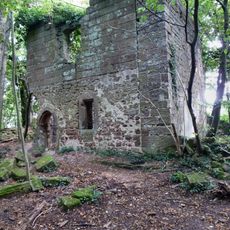
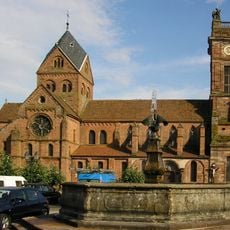
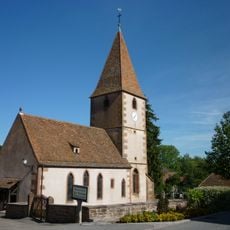
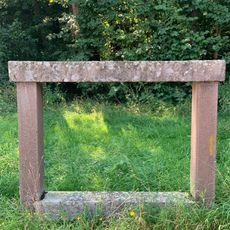
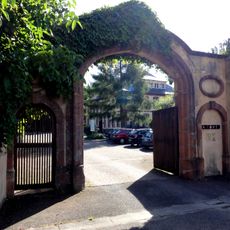
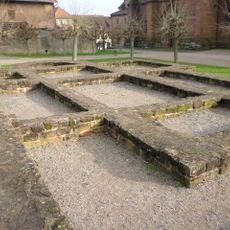
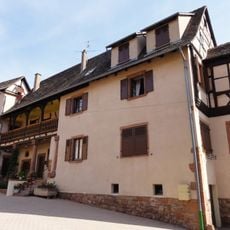
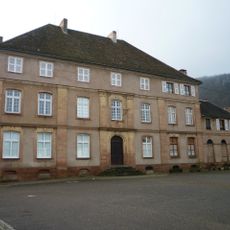
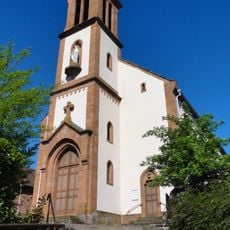
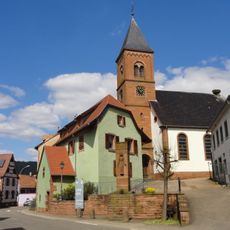
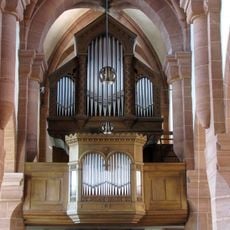
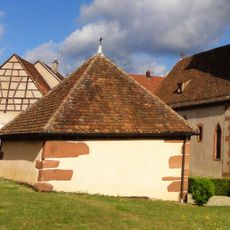
The Abbaye de Neuwiller-lès-Saverne is a former Benedictine abbey whose main building, now the parish church, shows construction from the Carolingian era to the Baroque, including a west facade rebuilt in 1768–1773. South of the church survive the remains of the Romanesque cloister, with a portal framed by a moulded surround and seven leaf rosettes, and the chapter house under a vault of 3×3 bays.
The Benedictine abbey was probably founded in the 720s, though sources name either Bishop Sigebald of Metz or Pirmin, who was at least its abbot. In 836 or 846 Bishop Drogo of Metz moved the relics of Saint Adelphus there, making it a pilgrimage site. In 1029 Dietrich, a pupil of Abbot Poppo of Stablo, became abbot and the monastery joined the Hirsau Reform.
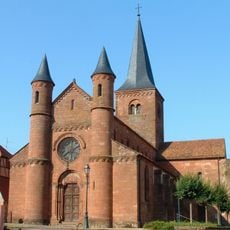
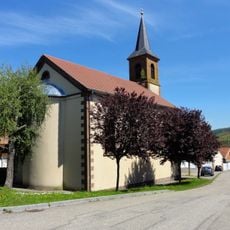
The abbey's pilgrimage status dates from the transfer of the relics of Saint Adelphus, tenth bishop of Metz, by Bishop Drogo in 836 or 846; miracles were reported at the translation. In the 12th century his cult was reorganised with a separate church, St. Adelphus, served by a college of canons under the abbey's supervision, a arrangement that produced conflicts documented as early as 1147.
Visitors should start outside the complex to view the exterior structure before moving indoors. Guided tours are organized by the Patrimoine de Neuwiller-lès-Saverne association, which provides access to different areas and interior rooms.
The monastery housed a significant collection of relics of Saint Adelphus that attracted so many pilgrims that a second church had to be built during the Middle Ages. This additional church was needed to accommodate all the visitors who came to venerate the saint's remains.
The community of curious travelers
AroundUs brings together thousands of curated places, local tips, and hidden gems, enriched daily by 93,728 contributors worldwide.